Just a moon-watch ...
Just a few pics and some questions. Enjoy the pics and please tell me what do you think.
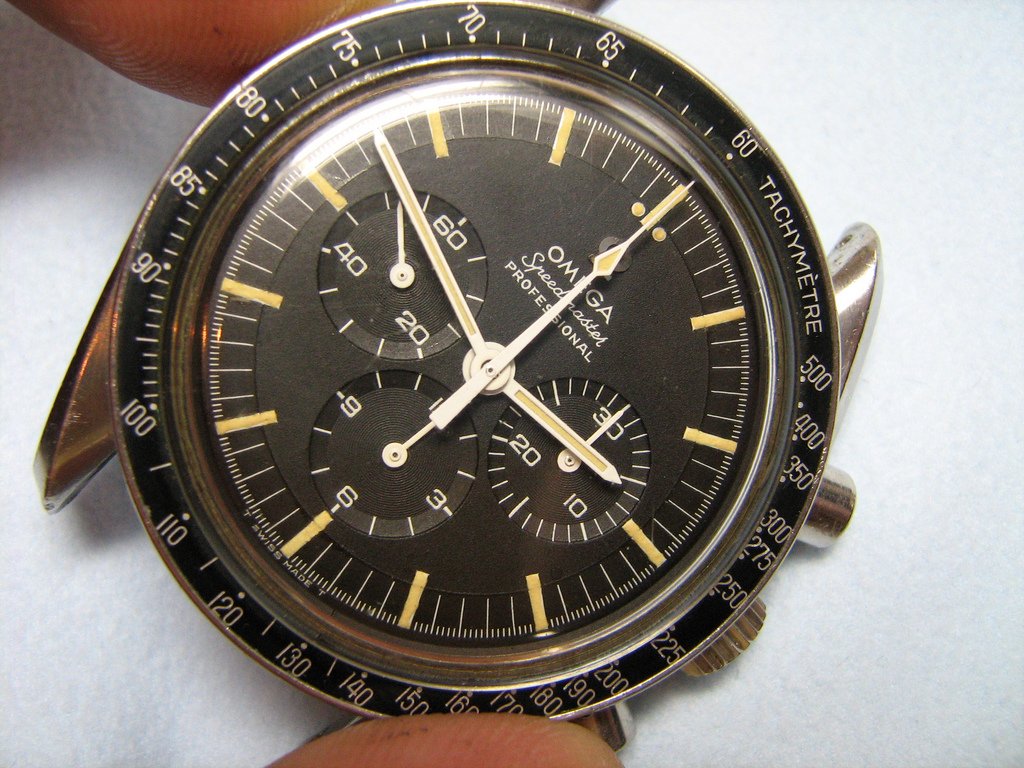
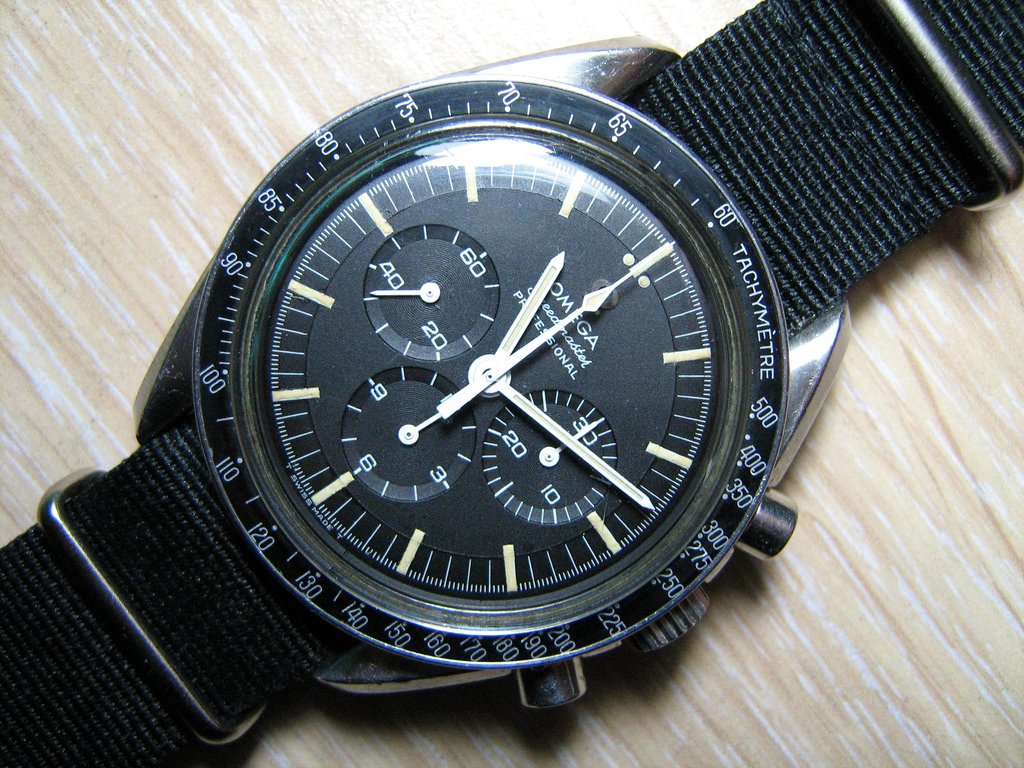
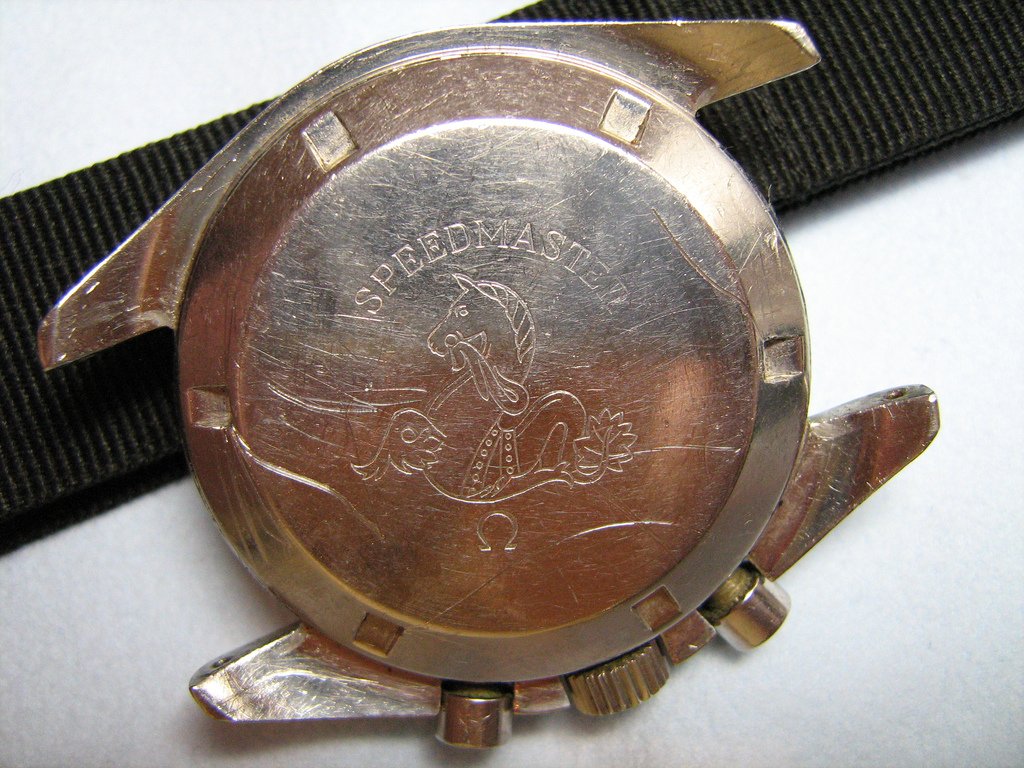
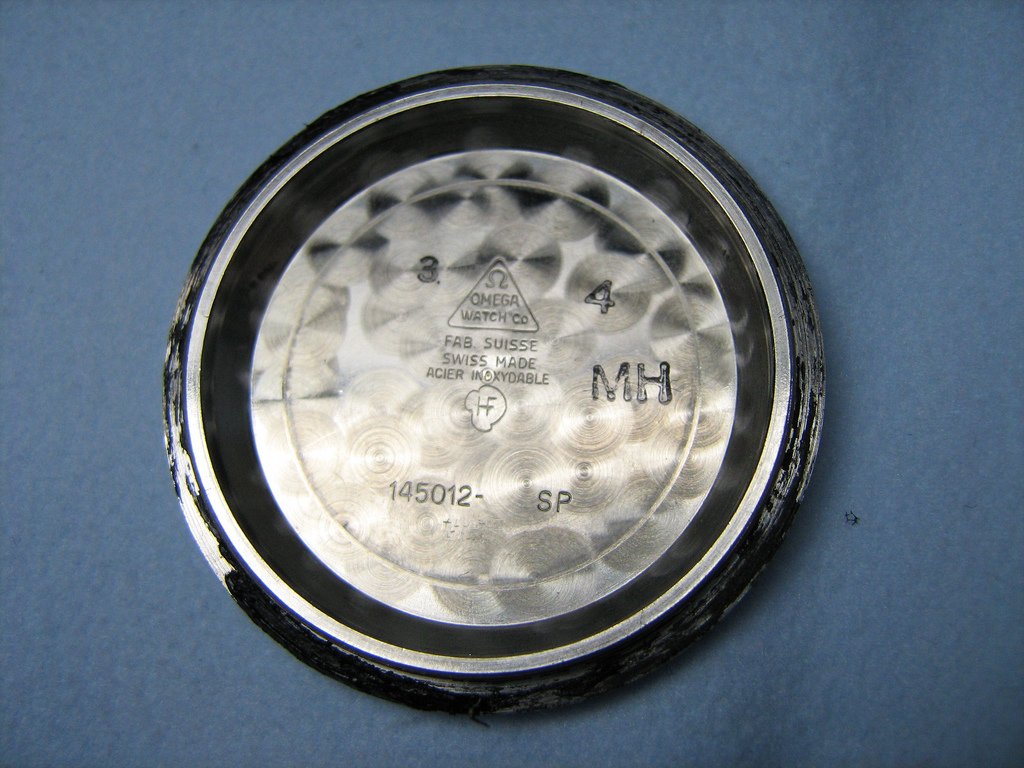
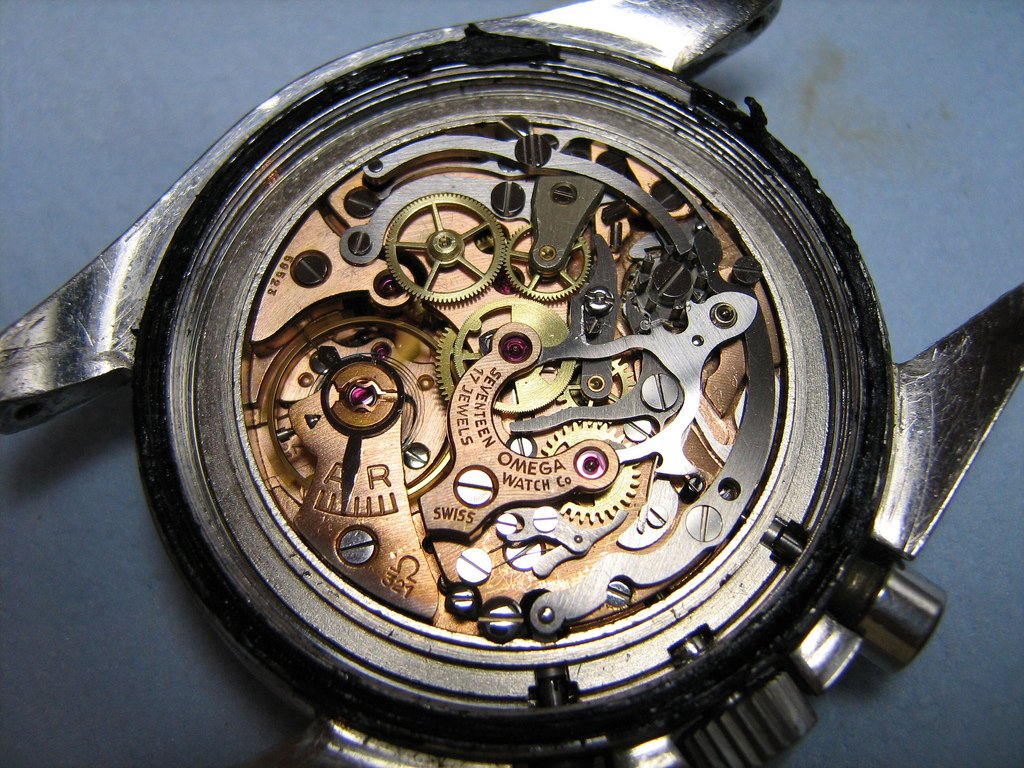
And the questions part

1. What do you think about the condition of the dial and hands ? What I mean is that I have never seen before a 145.012 with such a nice patina on the dial...
2. Very important : what do you think about the case-back ? As far as I know the ref no. should be "145.012- 67 SP", but here "67" is missing (the serial number on the movement is scrambled and I apologize for that, but it places the watch in 1967 for sure). And what is the meaning of the stamped "3" , "4" and "MH" ?
3. What do you think about restoring this watch ? What I mean is that as far as I can see, most people are restoring this kind of watches (new set of hands, new bezel, new case, new see-thru case-back), but I see a blasphemy in modifying the original design.
4. I'm really considering just a movement service and I want to let the external parts untouched (with all the signs of time on it, including the scratches). What do you think about that ?
Any input will be of great help.
Best,
Eddie

Well, Eddie, my knowledge is very limited on Speeds, no to say
That I know nothing about Speeds...
But I wouldn't touch the dial, as the Patina is maginficient.
It gives a lot of warnth and charm to this Speed, IMO, and I don't see why it would not be authentic.
But my knowledge is very limited on Speeds.
Best,
Nicolas
Thanks a lot Nicolas fo the kind words and
Allow me to say that I'm not worried about it's authenticity (is very clear to me that is authentic), I'm not worried about anything, but I'm very curious about what I have asked.

Edi, i know a bit about moonwatches so i'll do my bit to help
the dial is nicely patinated and looks original, very well looked after. i would leave it exactly as it is. it is possible its a replacement early on in the watches life so that its patinated, but in such good condition. something you;'ll never know.
the hands look too good and are probably later replacements during a factory service.
the bezel is good and should be left.
the case outside would benefit from a very light scratch removal and the old gaskets cleaned off and replaced. nothing too drastic or the speedy logo on the back will disappear.
with regards to the inside, not all casebacks were marked with the date so thats not unusual and nothing to worry about. the other marks are probably owners id marks as they are done differently too the stamped marks.
its a great watch in very nice condition, but if it were mine i'd have the movement serviced and light scratch removal to bring the case up to the standard of the dial.
hope that helps
best
Graham
Well...
That's a very complete point of view and is of great help. I was thinking about the same, except the light polish and the replaced hands. The hands must have been replaced very early, as they are showing some patina.
About the numbers and letters written on the interior of the case-back I don't know what to think, but I think you are right.
The movement will be serviced indeed.
Kind regards,
Eddie
i would say those hands are quite new uness flash distorts the colour
they look very white. i cant upload pics at the moment or i would show you my 64 speedy which is only 3 years older. the good thing is that the hands didnt change from your model all the way through to today so even if they are newish they are correct.
best
Graham
here's a pic of a 1964 to give you an idea of what original hands look like

you can see that the white is darkened and the lume inside it is much darker. original or replacements, your hands are correct for the model which is by far the most important thing.
best
Graham
Thanks for the pic ...
Please allow me what do you think about that, because I see a very interesting question here.
I'm also considering here another question : can the tritium on the dial absorb some color from the dial ? I'm asking this one because if the answer is yes, then is normal for the patina of the hour markers to be more accentuated then the patina of the hands.
Many thanks,
Eddie
P.S. Please allow me to say that I don't like to argue, but I like to discuss new things to me and maybe to the others and on the other hand I'm really enjoying my Speedy exactly as it is
Eddie, thats a very...
is possible that the tritium absorbs colour from the dial, i dont know and
i dont think anyone will know the answer to that. the hands and dial lume
on others i've seen patinate at about the same rate. the question is, what makes
the lume patinate? is it exposure to light, degradation of the trituim(the most
likely answer) or something else?
the years and you get to recognise new hands compared to old ones. the
white paint dulls off quite quickly. you also find that a high number of
speedies have replacement hands, but i dont know why. whether they are easily
damaged when removed for service i dont know. i would guess that your hands are
10 years or more old so not 'new', but not original. it doesnt matter as they
look very good, they are the correct style of hand for the model of speedy so
everything is good.
health.
Thanks again ...
But once the problem solved ... anyhow, your answers are of great help. Many thanks ! I'll soon send a request to Omega SA regarding the history of this particular watch.
Kind regards,
Eddie
P.S. I think is not the tritium that goes old, although it goes inactive in 12,5 years, but the other ingredients of the lume material.
the extract from the Omega...
weight in gold. it shows that the movement and case are original to each other.
it cant tell you when it was made, but can tell you the date it was first sold
and where in the world.
you ever think of selling it, the extract adds a huge amount of value even
though it doesnt cost much.
most famous watches in history.

Tritium
I wish I could get my hands on some, so I could do some experiments to see what the main influences are on colour change.
I suspect that the composition of the lume is what causes the colour change over time. Whether this is the Tritium itself, the phospor composition or the various binding agents is the thing to be worked out. Tritium activates Phosphor which emits the light, but the colour depends on other compounds (Zinc Sulphates compounds) that the phospor is mixed with. These compounds may oxidise to form the various coloured patina the lume takes on. Does anyone know what colour these Speedies glowed when new?
Interestingly [or maybe not=) ], the tritium tubes on my 1991 S&Y P490 are going grey. No warmth or orangeness at all. Hence my suspicion that it is oxidation of some sort.
Ben, i've never seen...
help you overly much. my 98 broad arrow hands dont glow much at all so thats no
help either. in fact, as is traditional, i'm being totally useless
:)
tritium off them or is that too simplistic?
Good idea...(but!)
Hey Graham,
I will rummage through my old watches for traces of the "T Swiss T". Though, most of the ones I would be willing to attack are 40s/50s watches (Old Timors, Piermonts, Rotary, Enicars, that I don't count amongst my collection), so they're likely to be Radium. Yikes.
[By the way, I took one of my Omega with Radium watches to my workplace's X-ray area (not a hospital) and put the geiger counter on it, it registered zero, but I got some strange looks, so I may not try it again!]
The current research plan is to talk with some materials guys, they've got years in in pigments, etc. Most of them are pretty old school, so happy to indulge left-of-field questions. Per my previous post, I am starting to suspect oxidation, so if they know what else is in the lume compound, they may be able to help. My Chemistry is rusty as hell!
I don't know if you've read some of my previous posts re: aging of lume. I have Seiko diver hands out in the weather aging. No real effects. Just some graining and greying, no warmth. From what I've read, the way to get modern luminova a nice and warm beige is with.....tea. That's my next experiment. Now, I just need the photographic skills to document the changes...
on the basis of current...
agree that the tritium in the hands and on dial should patinate equally or is
there a difference to how they are applied which makes a difference to the way
they age?
will smack my bottom(hopefully) :)
Difficult question...
It really depends on the mechanism of the colour degradation.
In general (and I stand to be corrected here), on the old watches I've seen, the dial lume seems to be more susceptible to colour change than the hands. As you suggested, it may be that the paint on the dial affects the result. Which goes somewhat against my theory that the change is caused by oxidation (to which the hands, in 'open' air, should be more susceptible). Then again, the dials probably come form one suppplier, with a certain compounf and application process, and the hands from another, so who knows??? It's mysteries like these that make me really want to find out.
I can't belive ...
I'm back with some macro photos of my Speedy, just to put some gasoline on fire
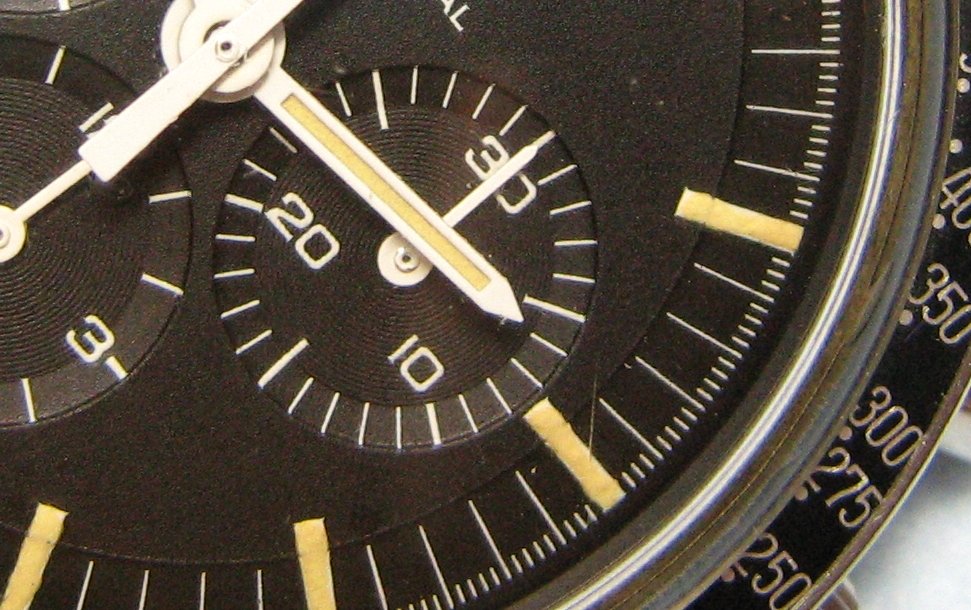
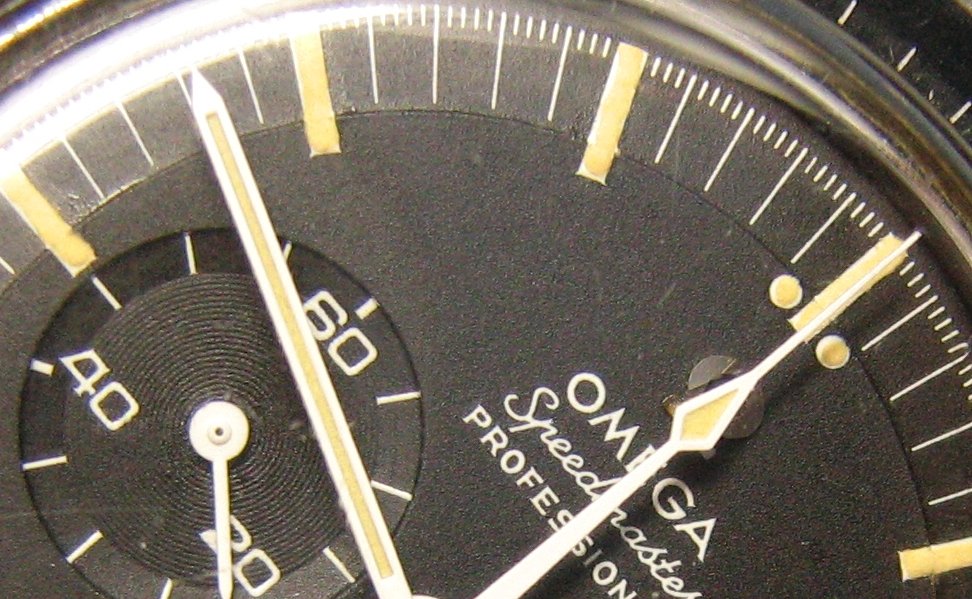
The experiments sound really interesting.
Best,
Eddie
Great macro pics Eddie.
the hands close up look virtually the same as the dial, but my brain cant take in that they are in such good condition after 42 years which begs the question about whether the dial has been replaced at some time. its not unusual as Omega like to change things for non essential reasons, but lets not get into that, we'll enjoy it for what it is.
regards
Graham
Thanks ...
Thanks a lot for your support and the wonderful dialog !
Kind regards,
Eddie

Just an idea
that's really an extremely interesting discussion going on here. Because my interest in vintage or aged watches has not been very deep so far I did not run into the question of different aging of the lume on dials and hands so far. But I like considering questions of that type.
So there is a wild guess that I would like to throw into the discussion. But first a question: When you observe that the lume on the dial degrades to some colour quicker than on the hands, are you referring to Speedmasters (i.e. dark dials and whide hands) only, or have you obeserved this difference in degradation on dials of light colour also?
Assuming that the effect occurs on dark dials only, assuming that the lume on the dials and on the hands was initially the same, assuming that the degradation has something to do with oxidation, one might suspect that eventually the speed of degradation has something to do with energy being added to the corrosion process.
A dark dial would absorb more light (i.e. energy) than the light hands and would transform it into thermal energy during absorbtion. So one might suspect that the dial is always a little warmer than the hands are. (Added to that the dial is always a little closer and better conntected to the wearers arm and the thermal energy radiated from there. This would also add thermal energy to the dial.) Remembering from chemistry classes that adding energy to a chemical reaction normally would speed that reaction up, I am daring the wild guess that here might be a possible explanation for a faster degradation of the lume on the dial.
I am aware of the not so remote possibility that I am talking complete nonsense here. What do you think?
Best regards and read you,
Martin
That's correct as far as I'm concerned and
Best,
Eddie