
18k, 14k from where ?
Dear friends.
Some collectors discriminate the watch cases which were made in the US or England or Argentina, they always prefer Swiss cases, especially 18k 14k solid gold cases. They say the gold alloy composition that was made in Switzerland has better colour and shinier, the quality that US and English cases cannot match.
My questions are :
Is that true ?
Do you see the difference in them ?
Are there documents mentioning this ?
Best regards.
Hoi
This message has been edited by hoipolloi on 2011-06-06 06:23:40re
Hmm, I know from comments by former Norman Morris people that they thought the quality of US made gold cases matched that of the Swiss made cases.
Certainly Dennison cases made in the UK are regarded as being as good in quality and composition as the Swiss cases.
I've heard collector comment about the colour of South American cases, and my feeling is that a lot of SA rose gold cases are too red.
That having been said, it all about the percentages of copper, silver, nickel and zinc. The absolutely worst 18k gold Ive seen is blue gold that uses 25% iron as the alloying metal.
I havent seen any particular comparative essays or references on the relative merits of Swiss over US or UK cases though.
Cheers
desmond

My understanding is ...........
that as far as the English made Dennison cases are concerned, they often add a premium as the gold case is much thicker and heavier (i.e. more gold) than the Swiss made cases. There were other UK manufacturers such as DS&S (David Shackman & Sons), Stolkase and MWF (Montal Watch Fittings) and I can't speak for them as I have no direct experience.
Hope that's of use
Cheers
Andrew

IMHO it is not...
Hoi,
IMHO it is not the alloy which commands lower prices with swiss, British or US cases.
In my understanding there should not be much difference in 18K gold alloy from Switzerland, US or UK
and the color is not so variable as with 14K gold where there is a wider spread in color due to the lower gold content
and the other percentage of Cu, Ni, Ag, etc... Color is a matter of personal taste...
I think it is more the "origin" from where the cases come from which commands differences in the appreciation and prices
collectors are willing to pay.
For example:
Due to custom restrictions there have been movements only been exported to USA or France and local case makers provided the
"clothes" for those naked movements.
The design of the case was often much the same as the swiss model. I have an "American Seamaster" which looks the same as the swiss brother,
but I am sure if I was going to sell it I would get less than for the swiss watch.
I have a SM chronometer with a Cal. 352 in a beautiful pink gold case with (the old fashioned) Omega logo in the case back,
but made in France (due to the French gold hallmarks) - I am sure I will get less than for a swiss one...
I think it can not be explained by the model (as there is no difference) and not by the gold alloy - it is just "the market":
most collectors consider the swiss cased watches more collectible than French, US or UK ones although there is no significant difference...
I have no problem to collect a French cased Omega if it is in perfect condition - for me it is condition that counts!
Just my thoughts...
Erich
I agree
with you Erich.
'National production' cases are the most collectible in their country of origin.
From what I see of auctions Seamasters cased in the US dont vary much from Swiss cased watches, but other models, such as the Constellation, do vary a bit, mainly in non-commonwealth countries.
International collectors tend to go for Swiss, but Ive seen UK Denison cases fetch very comparable prices in 18k to Swiss made cases in Connies.
What is needed is a concerted effort to document national productiuon cases for various models. I have been collecting information on Argentinian, Brazillian and English cased Constellation for a number of years now, but I'm nowhere near complete enough to produce a definitive table.
Cheers
Desmond
Thanks all.
Thanks Desmond.
You are always the valuable source of info to me.
Talking about collecting different kinds of watch cases from differnet countries, I agree only when you have more than 10 or 50 watches in your collection. But if you are a poor Vietnamese who just has enough money to buy a 14K gold capped Seamaster to show off to your friends, a Swiss case is the only one you think about.
Because of the demand for Swiss cases in those "poor" countries, you have to accept it as a fact and collect only the ones that you can resale easily Erich. ;-)
Let's go back to gold alloy composition, as far as I know, it's not easy to copy it without the formula (how many % of silver, coppper etc...) Not to long ago, I had a Constellation without a bezel, I asked a VNese goldsmith to make one for me and after spending 3 days with many tries, he ended up with one that matches only 95% with the colour of the case. (14K)
Hi Aroma.
You are right with the thickness of Dennison, I used a violinmaker gauge to measure a 9K Swiss case (made in England) and a 9K Denisson and the Dennison is a bit thicker.
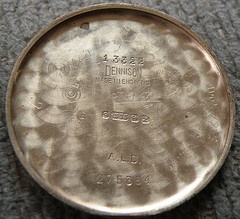
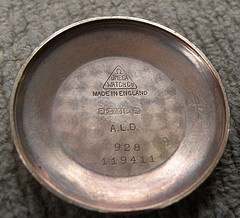
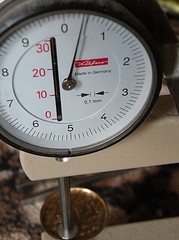
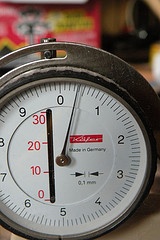
Regards.
Hoi
I think it matters which models....
... we're talking about here.
Seamasters and Constellations cased in countries outside of Switzerland were generally made to Omega factory specifications, as evidenced by the Omega logo appearing on the case along with hallmarks from the country of origin.
For the no model name solid gold watches, it is common (particularly with the South Americans) to find these without the Omega logo on the case. These tend to be of lesser thickness than their Swiss bretheren, and are are priced accordingly.
For some reason, we here in the US seemed to prefer 10K or 14K gold-filled over base metal watch cases in the 1950's and 1960's. Even though marked for Omega, they were not up to the quality of the gold-capped over steel cases used in other parts of the world.
Hope this helps,
gatorcpa
GF vs Gold Capped.
Hi Gator.
I think gold filled cases from the US attract buyers at the first look and cost much less (kind of Walmart with Chinese products) that's why now we have tons of cases that you can see the base metal inside and don't know what to do with them.
With serious vintage watch collectors, gold capped Swiss cases are always the better choice.
Regards.
Hoi.
This message has been edited by hoipolloi on 2011-06-07 09:32:38
Different colours of gold
Just remembered - I had an old 1949 model 2577 Seamaster re-plated as the 80 micron gold cap had worn through. The watch repairer who did the job said that the 'new' gold was much more yellow than the 'old'. Apparently, this is a result of customer demand as people seem to want a yellower gold than they used to. He had to change the crown as well as that would have been a different colour.
So it seems to confirm your suspicions that there are different golds.
Cheers,
Andrew