Featuresexpand_more
Spotlightexpand_more
Featured Forumsexpand_more
Brand Forumsexpand_more
Independent Brandsexpand_more
Lifestyleexpand_more
Resourcesexpand_more

WatchTech: Great write up and pictures...
I've seen David work in person and as good as the write up and pictures are, they just don't seem to do the work justice. It's always hard to convey exactly what is happening and how much work is really being put into these sort of things, but without being there in person, this is probably the next
10Y
0
WatchTech: Resonance
I've seen the resonance effect in person in a clock. It had dual gear trains and pendulums (one in front of the other), it's effectively two clocks, and only one of the trains had any power; yet the motion of the first pendulum was able to transfer to the second (un-powered) pendulum and both became
12Y
0
Breguet: May i request pictures of the under side of the dial?
I would appreciate it. I'm interested to see the soldered areas, which i'm assuming is only the sub-seconds disk, but possibly the name tag as well, although i don't think so.
13Y
0
WatchTech: Frosted finish.
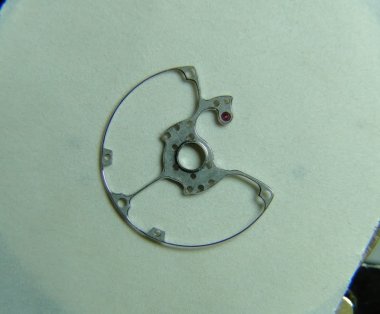
Hello, I have done this frosted finish on many things. As has already been mentioned, you need granualized particles of something harder than the material you're finishing. I use silicon carbide honing powder, which is readily available and comes in different grades, you can achieve a finer or rough
13Y
0
WatchTech: Thanks for sharing.
I appreciate the post, John. I'm always updating the blog and i should have the first actual watch parts made within the next week or so. It would be interesting to get feedback from the folk on here at that time. -Paul
13Y
0
Independents: Very detailed work
David, I don't think you showed me the picture of the pallet before. It shows just the level of detail that has to be considered for every component. Very impressive even in it's unfinished stages, i like those hands as well, they go very well with the dials. Also, my school used a Microset for thei
16Y
0