Featuresexpand_more
Spotlightexpand_more
Featured Forumsexpand_more
Brand Forumsexpand_more
Independent Brandsexpand_more
Lifestyleexpand_more
Resourcesexpand_more
Vacheron Constantin: Thank you for crediting my photos and site.
Having handled both I can say that they are beautiful in person and on the wrist but if I had to pick one it would be the steel. Probably the nicest steel example I have had the pleasure of handling especially with that dial.
1M
1
Vacheron Constantin: Thanks!
Right one has better dial condition, left one has better case condition. I personally like both. They illustrate different dial manufacturing techniques that make for a very interesting study.
7M
0
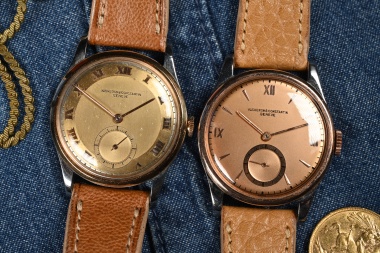
Vacheron Constantin: Reference 4073
The reference is 4073. Same style as case maker - Gerlach - as the 4217 but with subsidiary seconds instead of center seconds. You are correct in that the caliber is a 453 but it is unmarked as this is early in its run if I am not mistaken. Your watch dates to ~1941.
1Y
2
Vacheron Constantin: If an accent was lost due to cleaning, I personally would still refer to it as original.
I would just disclose to the buyer that it was cleaned.
1Y
0
Vacheron Constantin: The term refinished/redialed and cleaned/rejuvenated are not synonmous
The former is indicating the signature has been redone all together while the later is referring to the original signature remaining intact but the surface of the dial being cleaned. Regarding, the accent above geneve its not a hard rule. There were factory dials produced without the accent. We know
1Y
1
Vacheron Constantin: Thanks for the reply
The discussion I wanted to spark was revolving around enamel dials in general not just the specific example listed above. Regarding your response I think its important to first delineate between refinished and cleaned/rejuvenated in order to have a clear distinction. Refinished should be referred to
1Y
1
Vacheron Constantin: Revisiting the topic of original signature enamel dials.
Some of my watches lately have raised some debate regarding if they have remained original or have been cleaned in the past. Let me start by saying that discussion is a GOOD thing. The open flow of communication between collectors only benefits the community by broadening our knowledge and adding to
1Y
2
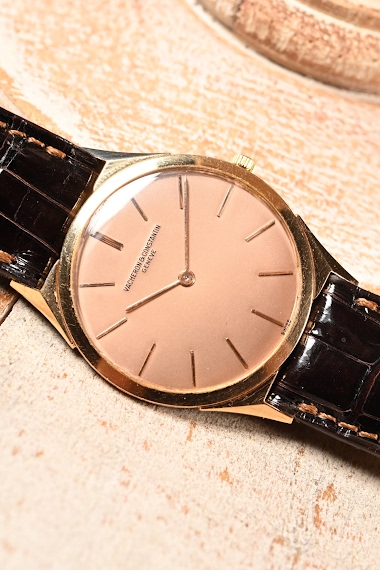
Vacheron Constantin: I misspoke on the reference.
After some further digging I have come to the conclusion the reference is actually 4195 and not a 4066. This resulted from a number of different factors including the watches case size. At 35mm it is bigger than the 4066. Additionally, this appears to be a reference that the maison sold as part of t
1Y
0