
anaesdoc
1772

I agree with your point, Art ...
pure numbers often do not tell the whole story. (The pun - "in most cases" - is great, even if not intended!)
Nonetheless you may agree that even the flattest case and the shortest curved lugs cannot reduce the actual case size. On your wrist 40 mm should work, but on mine I fear that 40 mm will be difficult. But that would have to be tested on the wrist.
Another aspect that does deter me from these "new classics" is the price: you have to pay much more money for a subjectively less attractive watch.
I would rather try to find a well preserved vintage Omega from the 60ies which will cost me a trickle of the freshly released new classic with a super high-tech co-axial movement that I do not rate that much (due to my watchmaker who says it would represent the improvement of an already perfect running system with much effort and little gain, more of a marketing tool in his eyes: look here - something really new and worthwhile paying a lot of money for it).
Let´s be realistic: the simple reissue of a vintage Omega would not elicit that much publicity and public interest. Most people that the watch brands aim for as customers - again we should face reality - are not watch enthusiasts like us, but wealthy buyers who ask for prestige, innovation and value. An understating watch with a diameter that is way below that of its competitors would be too risky to buy. On the one hand these customers - I do believe so - ask for individuality, on the other hand they fear to loose alignment with their peers. So they want "different" watches within a mainstream pattern.
But luckily enough Omega had big production numbers in the past and there still are some nice vintage watches going round  .
.
Kind regards
anaesdoc
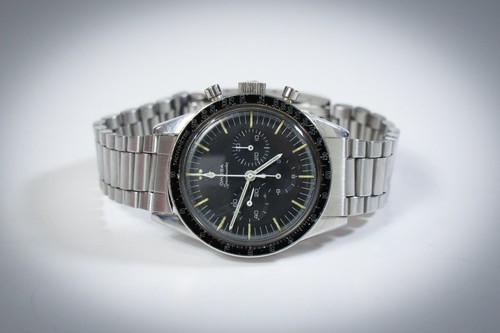
P.S. An example from the classic days of Omega is this cal. 321 chronograph that I would very much like to find one day:

Available on the marketplace



BaselWorld 2014 : OMEGA 2014 Collections & Master CO-AXIAL Calibres
OMEGA Seamaster 300


Superb. Two reserves, nonetheless...

This was "watch of the show" for me...

Great! Hoping for a nice price and this one will be 2nd next

It looks really great...
OMEGA Speedmaster Professional Apollo 11 45th Anniversary Limited Edition
The OMEGA Speedmaster Mark II - A Classic Chronograph Updated
The OMEGA De Ville Trésor
Lovely classic, though sadly too large for me
The lugs and the indexes are top top top on yours, Anaesdoc. I can't agree more
If it only was mine, sigh!

In most cases (no pun intended!), I'd agree . . .
I agree with your point, Art ...
OMEGA Seamaster Aqua Terra 150M Master Co-Axial
OMEGA Constellation “Pluma”