
The german "cabinotier".......
Hi all,
I'm sure almost all of you've heard of the cabinotiers of old Geneva, those watchmakers working in the small workshops, often located in the garrets of Geneva's town houses.
It was the place with the best availlable daylight, the most time of a day, a natural place for this tiny workpieces, incredibly demanding for the human eye.
When visiting german watchmaker Christian Klings recently I felt reminded of this old term, not only because his tiny workshop, also on the top floor under the roof exactly meets this descriptions; also his style of watchmaking comes very, very close. Few has been written about Christian Klings and different from the few "stars" among the AHCI his name isn't that well known even among those, more focused on the world of independents.
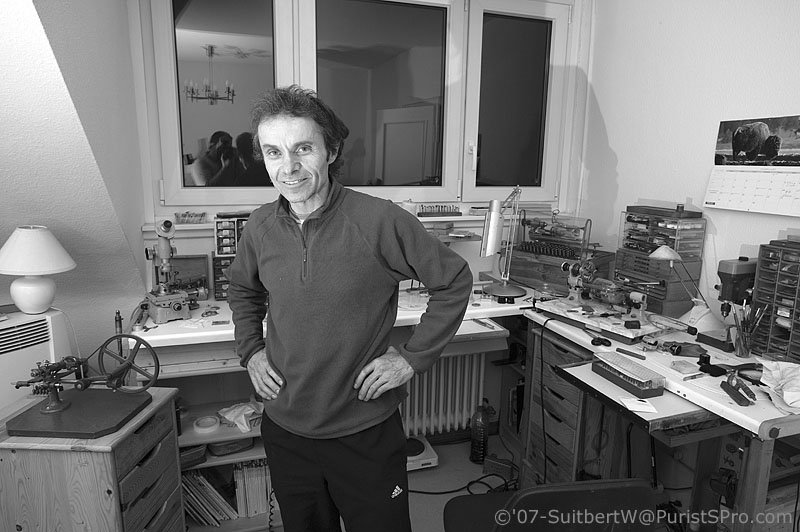
But, I can tell you,IMO he's an absolute insider tip for all those interested in real traditional watchmaking. Perhaps I'd better say "horology" here, as the degree and depth of what Christian does is really impressive - and looking at his methods, equippement and machinery will soon reveal he's doing this the most traditional way you'd imagine.
Some fancy CNC machinery here or there with highly praised precision - no, sorry, not here.Most basic machinery such like any watchmaker hundred years ago had as well and lot's of real handwork. It's handmade in the best sense - and in this case it's in no way a stretch of the term.
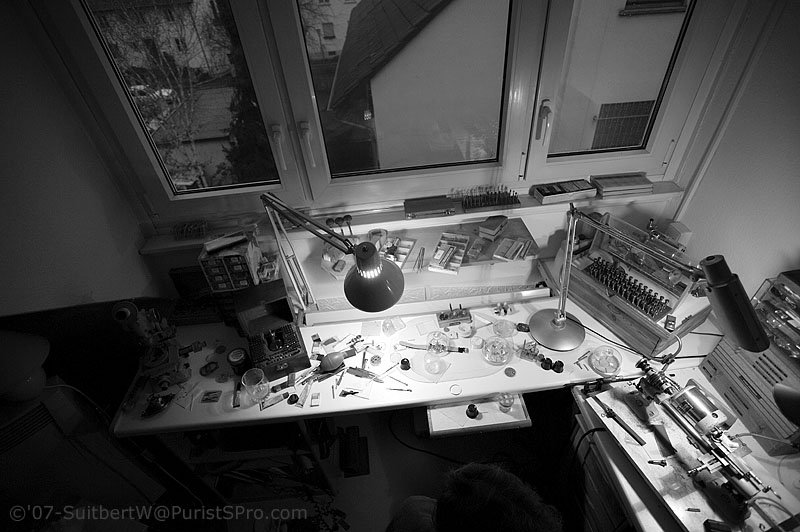
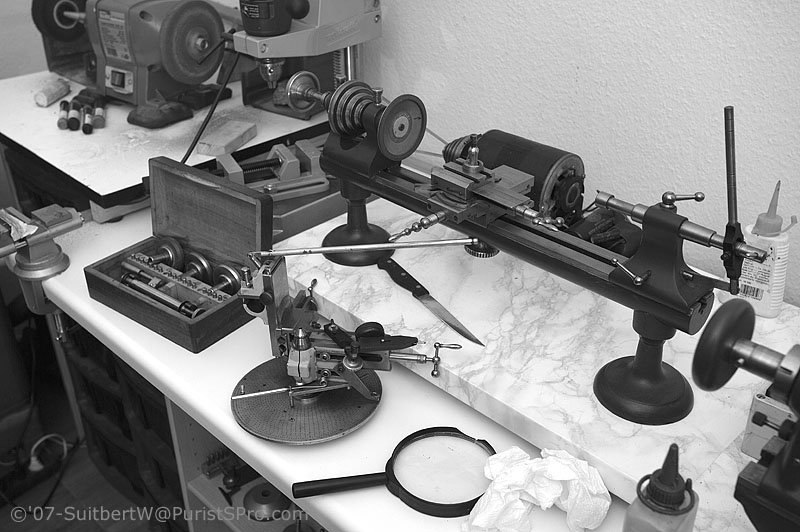
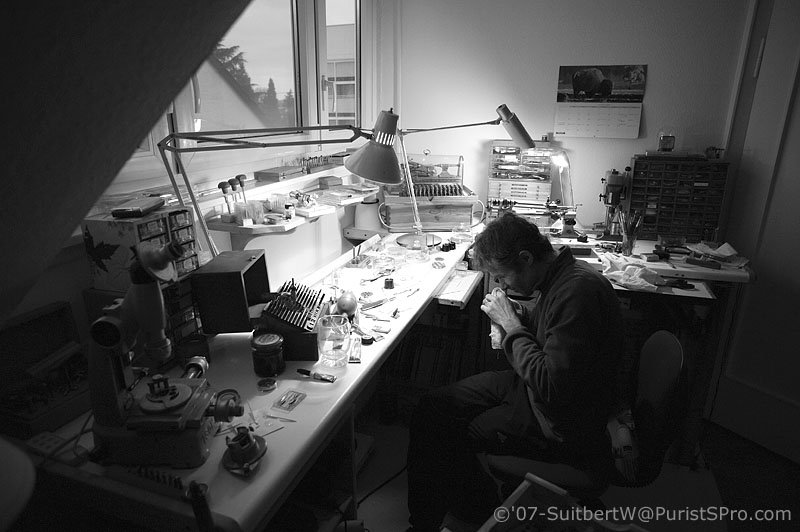
When I first met Christian in the 2005 Basel fair, I hadn't heard a lot as well, but at least I remembered some mysterious escapement, called "desmodromic escapement" (this term probably will ring a bell with the motor bike friends among us, think Ducati). I was really blown away by what I saw - unbelievable to me at that time how a single guy could invest such an amount of painstaking work and energy in such developements. And quickly learning that this was a small part of his work only!
I'll post some more comprehensive information on Christian and his desmodromic escapement later, but for now:
it's a single impulse, lubrication free pivoted detent escapement - but no spring for the chronometer lever and working reliably under wrist watch conditions (i.e.reasonably shock proof) with 28.800 bph!
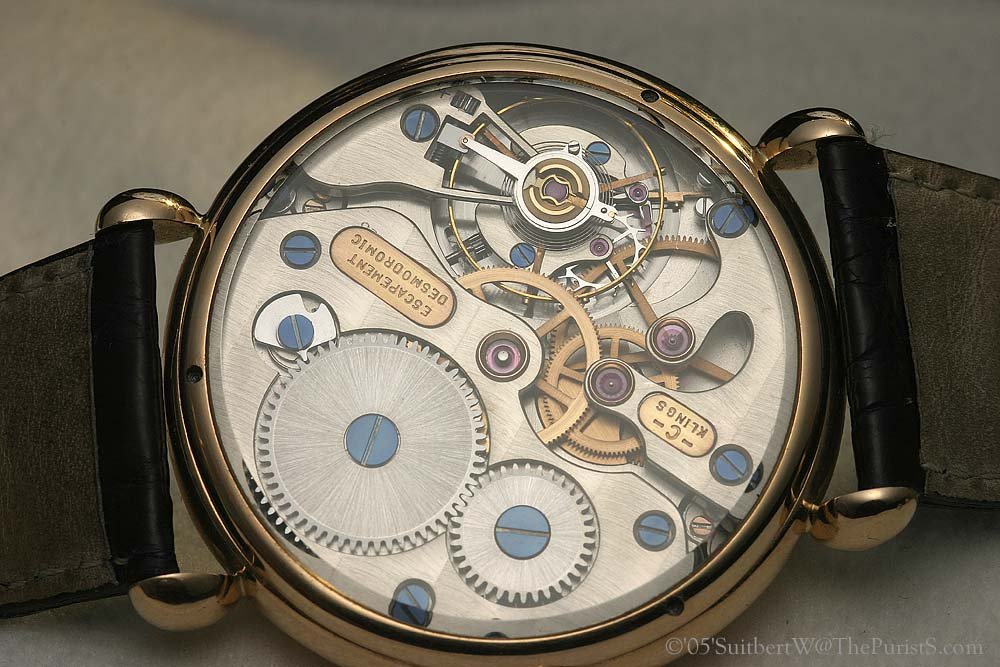
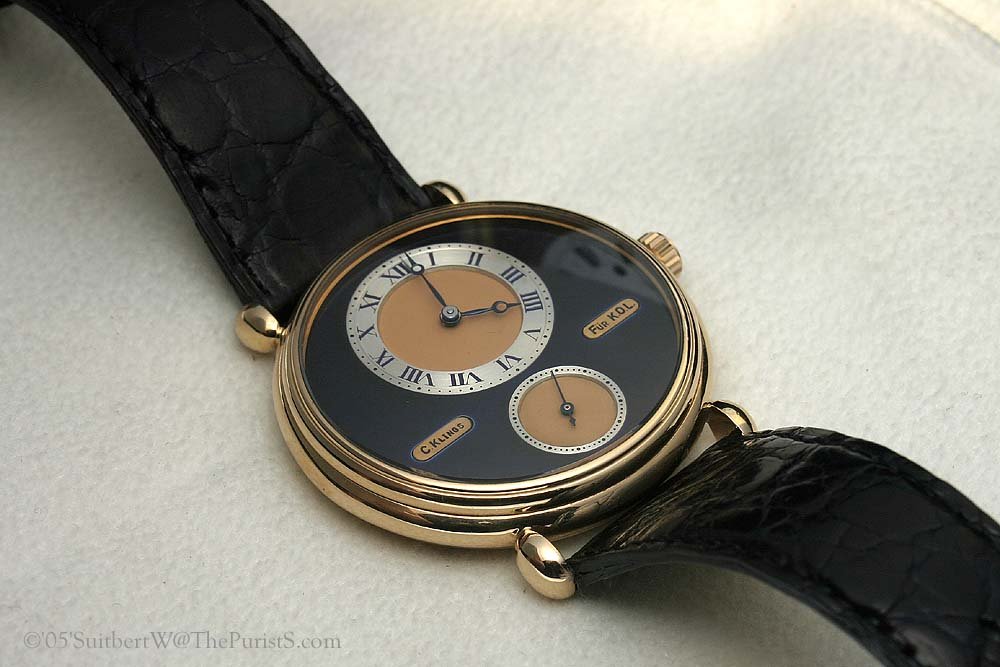
His cases are very tastefull and classic, as is the overall aesthetic of his watches - not surprising knowing about his admiration of the great watchmakers like A.L.Breguet and Dr. George Daniels.
Christian's work has an incredible depth - besides almost all vital parts of the movement, he makes his own cases, the guillochage of the dials, engraving the dials....... he's even modifying the crystals with changing/polishing the bevels to enhance the details of the dial!
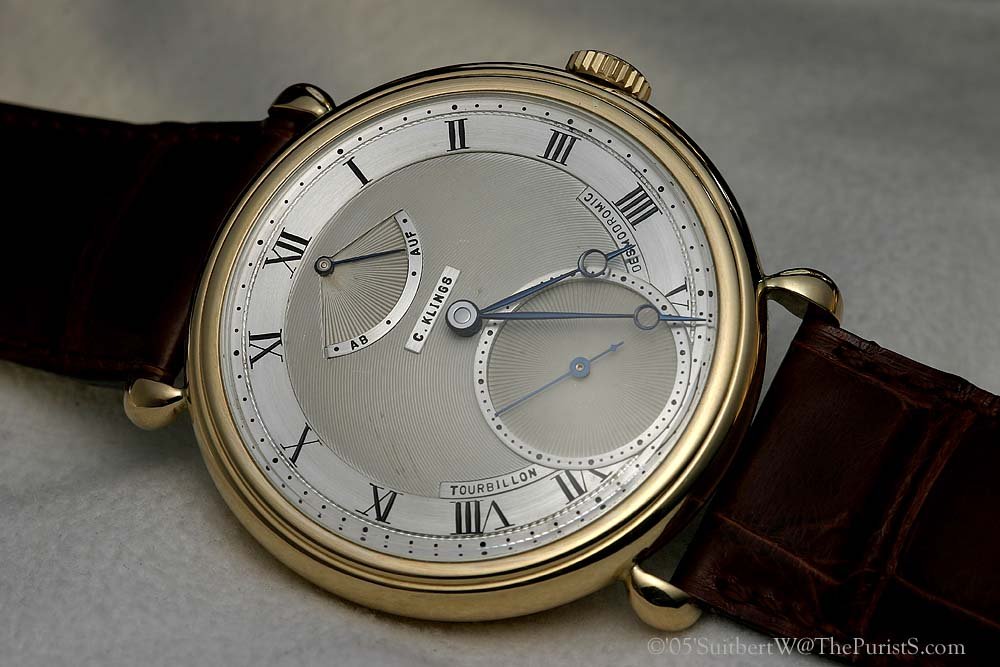
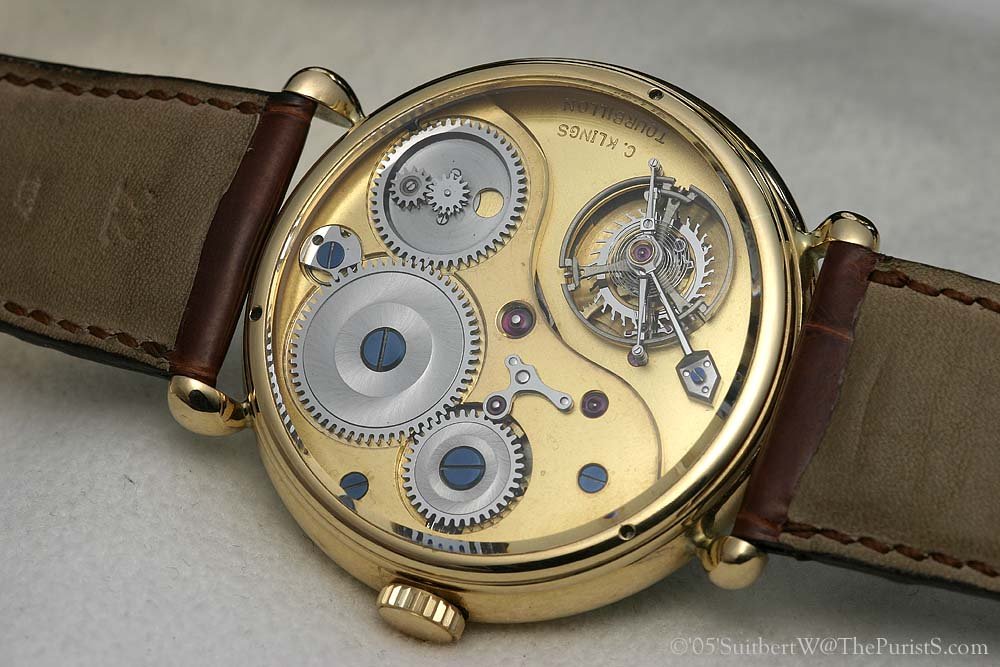
His No.5 tourbillon is a real treat for any horological tech nut - it's a 7.5 seconds tourbillon with a fixed escape wheel (it's fixed to the mainplate). Some will be reminded Albert H.Potters famous tourbillon of similar design. But this one is even more special as the balance is impulsed through the hairspring only !! Also more details on this one later. Normally I'm not that fond of higher beat rate movements - but this one is just spectacular to observe.
As you may have guessed already, all of Christians finished watches are unique pieces - and unique here really means unique 
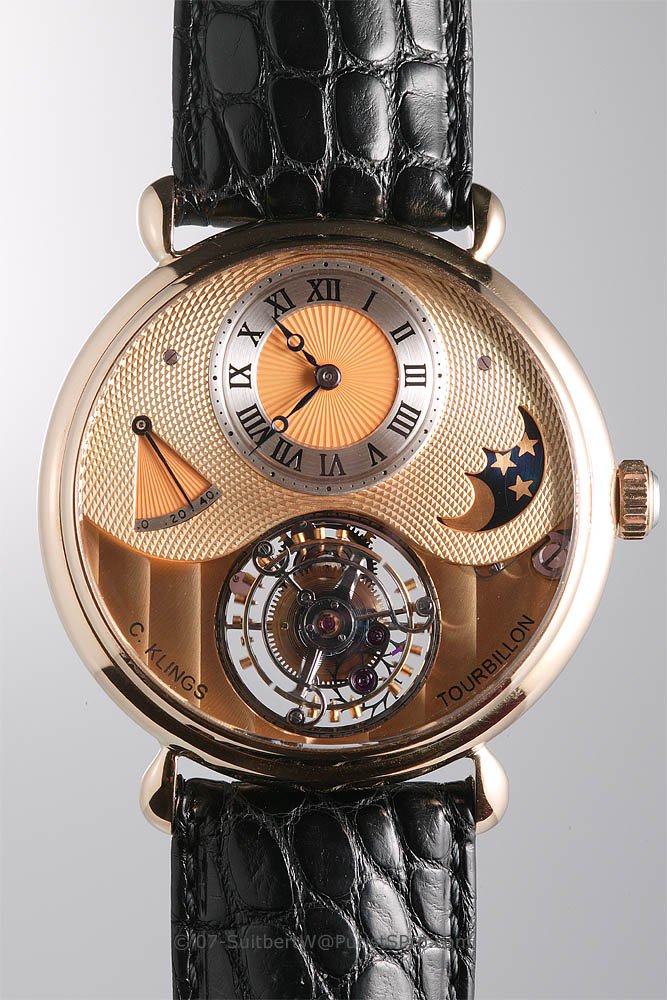
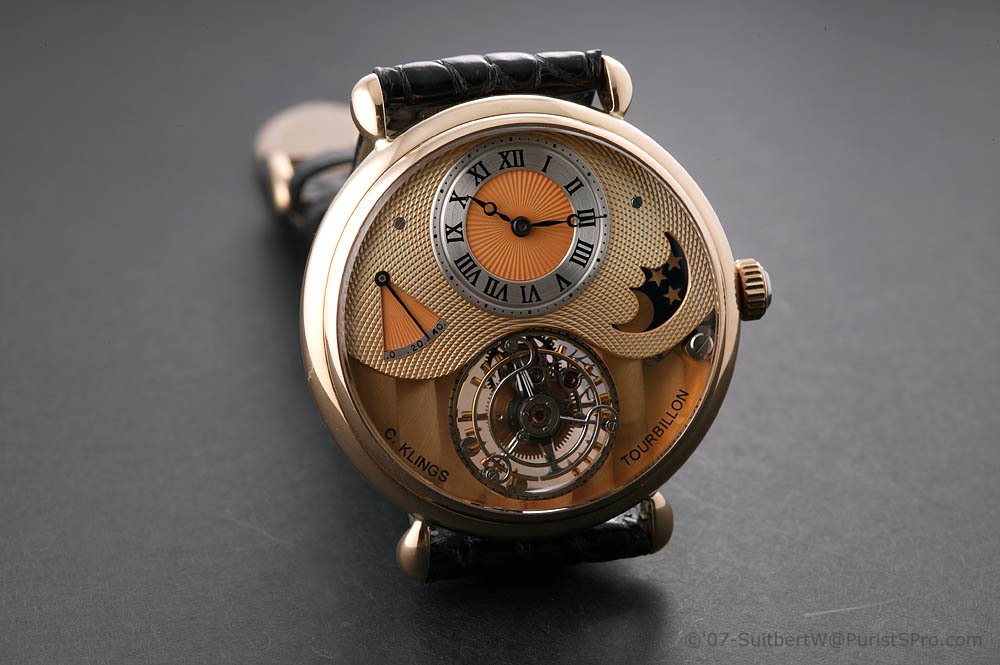
But, before I get lost, here are some pictures of his most recent creation - tourbillon No. 7 - a flying tourbillon with swiss lever escapement, with flying third wheel, moon phase and power reserve indication.
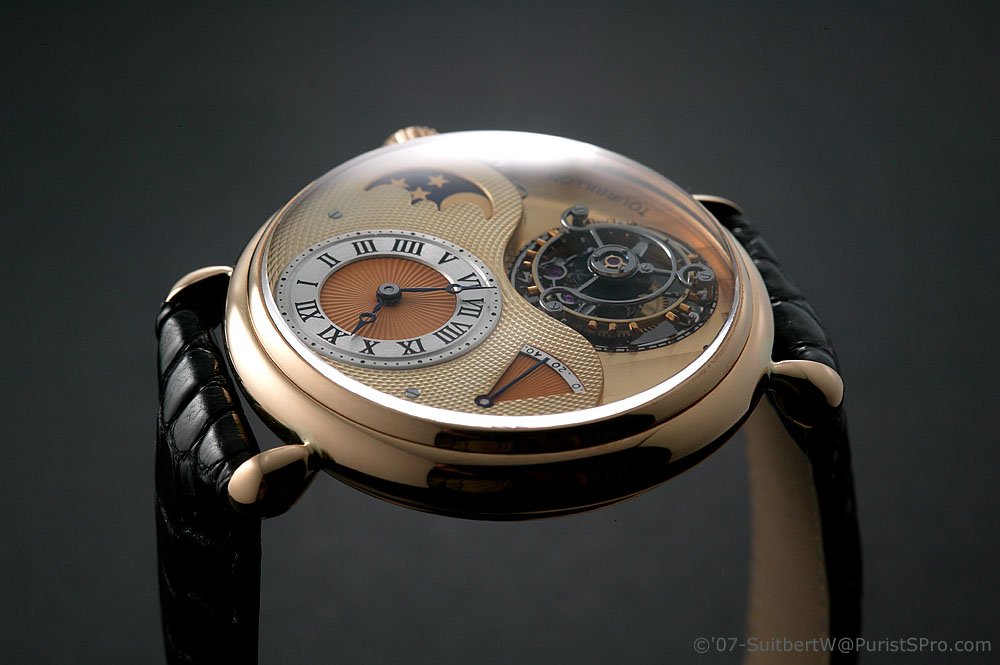
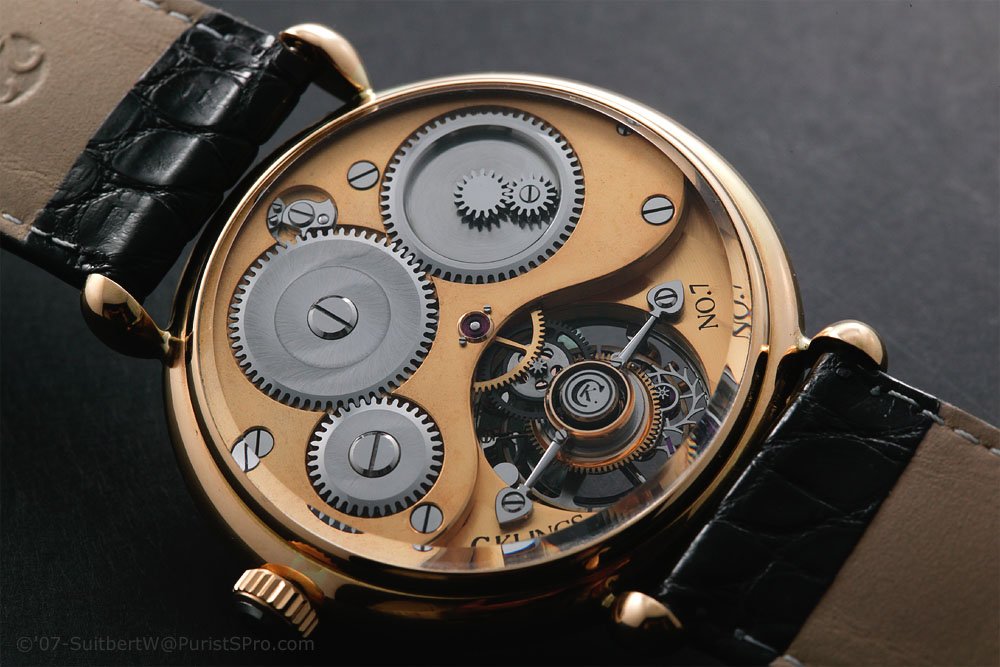
Christian is AHCI candidate, but he'll not be in Basel this yeear :-(
Hope you enjoyed the pictures and as promised, I'll post more on Christians work later!
Best regards
Suitbert

Beautiful watches!
Thanks for showing us the environment that these beauties were born in as well.
Hi, Allen,....
...here're two more, but no frontal dial shot - I'll upload one later.
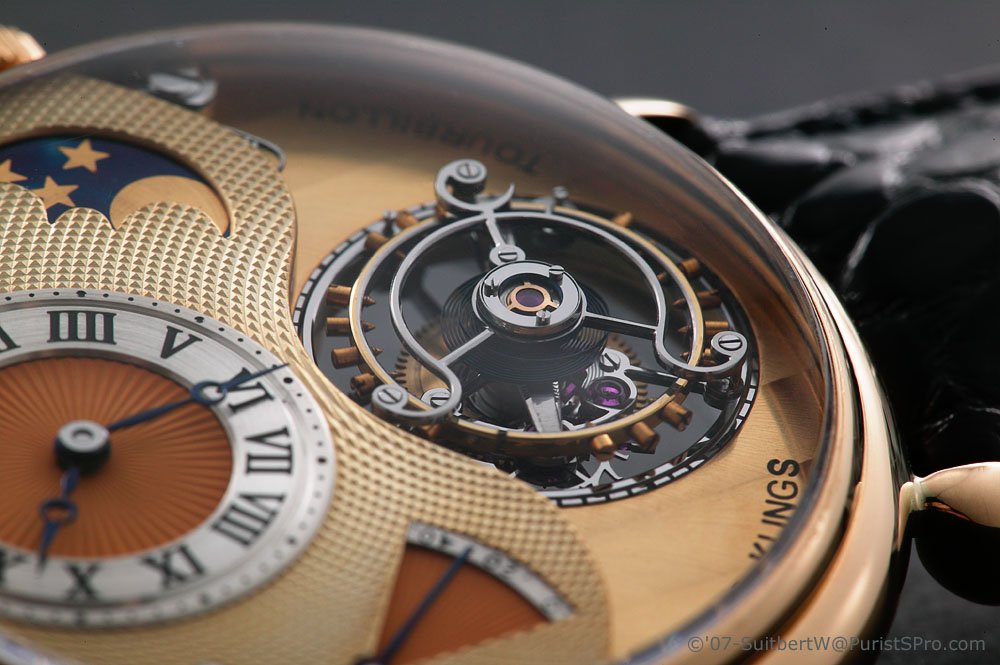
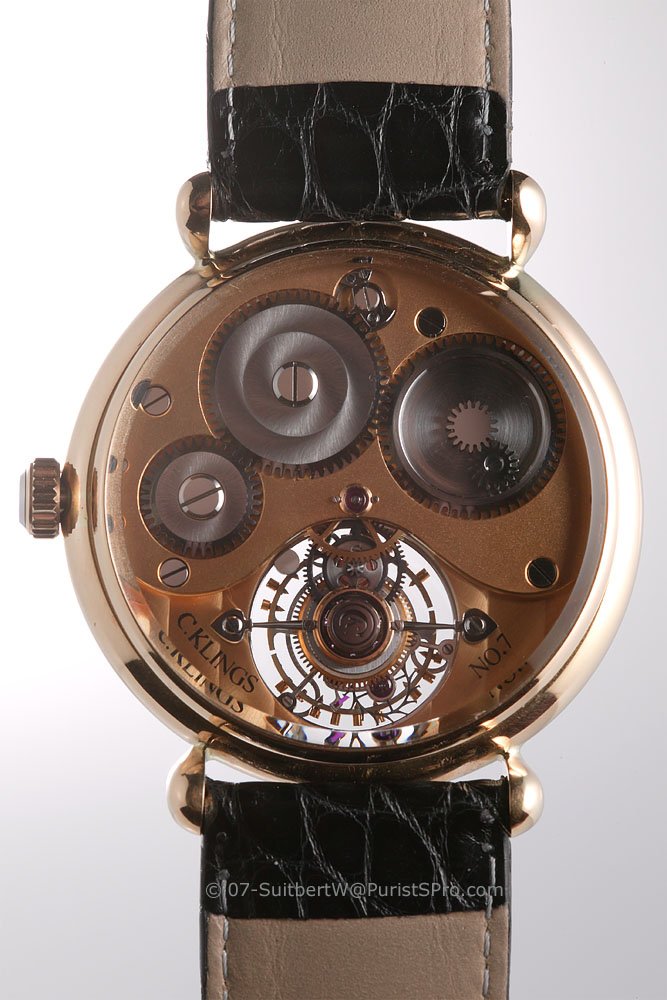
As you may see both, the flying tourbillon and the third wheel are supported by ball bearings. For this one Christianused a beautifull bimetallic, cut balance with steel hairspring.
Best
Suitbert
Here's a more frontal dial shot..
but, they're not that good and I've to go through the pic files again, if there's some better, more doing justice to the work.
As you say - the tourbillon cage is particulary beautifull !
Best regards
Suitbert
Wow.

Just out of curiousity, Suitbert, is this the only . . .
I'm not sure who was pioneering ...
I've to admit I'm not sure who was the pioneer in that regard, but something like the (1992?) IWC Destriero comes to mind with the flying tourbillon also supported in a ball bearing - from an engineering standpoint it's a somehow logical choice. Speaking of IWC it's also no surprise to see Richard Habrings own toubillons also often equipped with ball bearings.
There may be many others (honestly I'm not sure how many in fact...) perhaps someone else knows what's with Blancpains (Clabrese) torubillon for example, I'd not be surprised if that would be the case as well - I''d never the chance to closely inspect one.
As you may see from the pictures of Christian's No. 7 also the thrid wheel (that's the one driving the tourbillon) is "flying" and supported by a ball bearing.
IIRC, with No. 7 it's a ruby ball bearing for the tourbillon cage.
Best
Suitbert
No greater 'elf' factor...

I'm a great admirer of his work, thanks for the update!
My understanding is that Mr. Klings was living and working in California about the time I got interested in watchmaking, but unfortunately he had already moved before I had ever heard of him, otherwise I would've loved to have visited his workshop of course.
I heard a funny story about Mr. Klings from a watchmaker in SF. I can't vouch for the veracity of the story or even that I'm remembering it correctly, but reportedly he was asked to repair/restore a Patek Philippe automatic that had either a badly worn or missing ball bearing. Rather than trying to source a replacement (or perhaps after attempting to do so unsuccessfully), Mr. Klings simply made one by hand! For all you watchmakers, machinists, model-makers or otherwise craftsy people out there, you can probably imagine the difficulty of manufacturing something that small and regular (symmetrical in every regard) that requires such extreme precision, but for those of you who have no context: it would be a HUGE challenge, let me assure you.
Another story was about Mr. Klings being commissioned to add a moonphase to an AP ultrathin automatic (2120). He did so including making the dial for it from scratch, reportedly without adding any height to the case. Wow, I say.
Of course when I saw the pictures of his semi-flying tourbillon in International Wristwatch a little while later, it was clear to me this was no ordinary watchmaker performing the occasional extraordinary feat. He's someone to watch for sure.
Suitbert, thanks for the further/updated info and, Mr. Klings, please accept my apologies if I'm misremembering or otherwise misrepresenting either of these stories.
_john

yes..I read about Klings california past, in a magazine some years ago.
indeed, his name was first dropped in this forum in 2001 or so

Marvellous pics !
for these fantastic pics, of a real classic looking movement !
The finish seems incredible!
BTW, in this country, the best tasting
ice cream is,..... Klings :-)
Cheers
Doc
LoL - Doc, I've to tell Christian about that swedish ice cream.....
Best
Suitbert
Klings !
An ice cream cake, with vanilla ice cream, chocolate, butter toasted nougat, marzipan and a touch of arrack !
Always on the table when someone in the family is having birthday :-)
A family owned, local, quite small company.
Mmmm....
Cheers
Doc


Also love the tourbillion #7

What a great example of real watchmaking!
I shall not forget to say that his technical solutions are far off the main paths and represent the fruits of out-of-the-box, individual thinking. As far as i understand, Mr Klings is also a down to earth personality.
Great work, a real treat! I just wonder how these watches sound...
Thanks Suitbert for bringing this to us!
Best,
Magnus
Magnus, you're right on all accounts...
Best regards
Suitbert
Oh my god. . .
Love to hear more about that one. . . pleeeeeeeease???
Jack

I'm with you for number 5 Jack
Amazing work, fascinating to teh extrreme.
I'd love to knpw more about his "no-tourbiilon" watches!!
Cheers
Dje
Gotta hear more about it. Haven't been so excited since. . .
Jack
Hi Jack, Jerome....
.... No. 5 is a most fascinating piece, your pick isn't surprising to me
It's a long story and perhaps much better to go into Christian Klings desmodromic escapement first as it's part of this very special piece as well.
And, I should also point out that No. 5 somehow will remain Christians "unfinished opus".
As you already may have seen on the pictures - it doesn't look really finished and it isn't - Christian invested an incredible amount of time and energy into this piece but at the end it was a "glorious fail" (like it's historic predecessor)- but an very intriguing one!
The basic principle behind was created by Himmelheber, I'll scan some of the drawings I can find for better understanding later on.
Here's a larger view of the tourbillon so that you'll have some puzzling late sunday fun
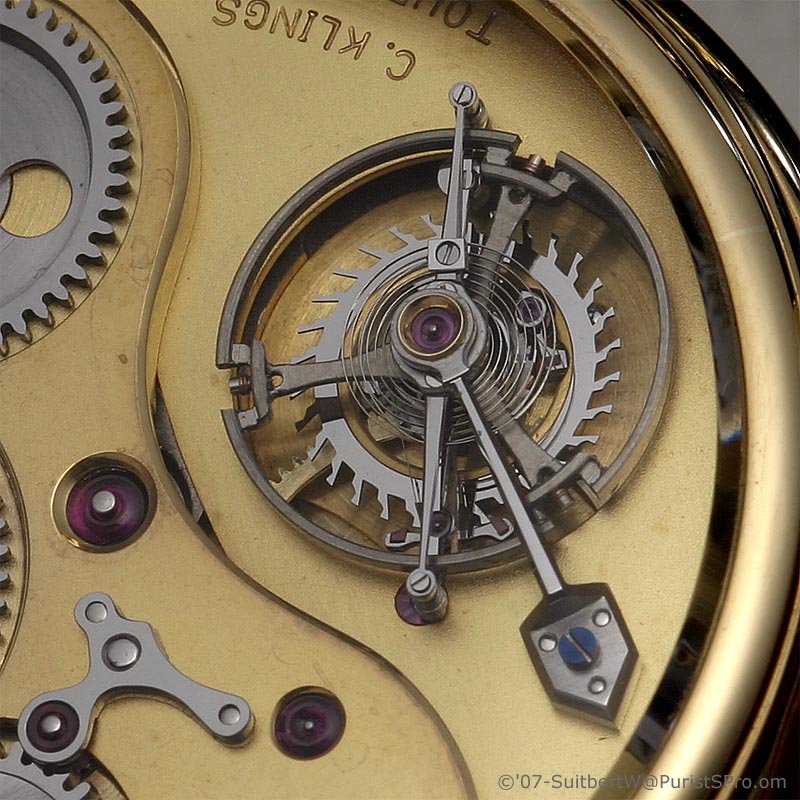
As said - it's a 7.5 seconds tourbillon and as you may see driven by the fourth wheel (thus turning cw) - but more later
Best
Suitbert
OK, thanks Suitbert, what the heck. . .
Jack
The small ratchet wheel close to the tourbillon center...
Hi Jack,
that's a constant force mechanism!
During his countless hours trying to get it working, i.e. to achieve a little better rate stability, he realized that this escapement was very sensitive to this problem and he decided to add a constant force. You may imagine what that means once the base design is already done ;-)
The original idea (it's an old dream to somehow achieve a less harsh impulsing, I'm lacking the correct english term, perhaps it could be called "impact free" impulse?) goes back to Benoit and Himmelheber - bot designed torubillon escapements where the impulse is supplied through the hairspring (i.e. not directly to the balance).
As nice as it works in terms of smoothness of impulse, it's extremely problematic and complex to work precisely.
The exact timing for unlocking/impulse is most crucial and that's one of the weak parts of those designs.
BTW, Rieflers version with balance wheel (the pictures of Paul Gerbers table clock ) is similar and I'd say belongs to the same group.
Christian Klings combined this basic design with his desmodromic escapement - but as said even investing far more time and energy as expected - it never worked reliably. But looking at the running escapement is incredibly mesmerizing and one easily forgets about such sterile things as "rate"
If' I'd have had to guess if it could work before I actually saw it in the flesh - I wouldn't have believed it could.
Best
Suitbert
OK, so let me get this straight. . .
. . .constant force escapement (!) impulsed through the hairspring, not directly to an impulse jewel on the balance? That's just wild. That it was done in a 7.5 second tourbillon just adds to the tastiness, even if it IS tempermental. I'd just love to hear more about this particular watch, and about the desmodromic escapement, when and if you have time; and I'm just staggered that anyone would try for a constant force escapement at all these days- I was under the impression that constant force escapements had been more or less abandoned by the mid 19th century.
I wonder if some other constant force mechanism would have given the necessary uniform delivery of power- a remontoire or fusee? I expect there must be something in the design of the escapement itself that made him try for such an exotic design and would love to hear more about it.
Thanks very much- the most interesting post by far I've seen in months .
Jack