
Marcus Hanke
[PuristSPro Moderator]
11295

I will have difficulties to meet your standards, I fear ....
... as you are aware of myself being neither a watchmaker nor an engineer. I have been supplied with ample information on the cal. A1000, but I am unable to independently evaluate it. All I can do - when I get that EvoTec - is subjecting the watch to various conditions of (ab)use and look if the movement shows any flaws, or does what is shall do. The good thing is that all my questions dealing withpotential problems of the peripheral rotor design were answered in detail, and I had the impression of the technicians and movement designers that these issues have been resolved to their satisfaction.
Having read your earlier comments, I think I have an idea where the earlier concepts had their flaws. But these have been made with the goal to create extremely thin selfwinding movements, as was the current design trend back then. Backed by the acceptance of large timepieces, the Bucherer movement designers hve the luxury of ample space to dedicate for measures to optimise efficiency and countering the adverse effects of mass inertia and bumps. Consequently, I have the impression that today, it is possible to make a well-functioning peripheral rotor, which opens some new dimensions in movement design, just think about the "stacking" of modules.
Regards,
Marcus
Family jewel: A visit to the Carl F. Bucherer manufactories

"The more you look . . .

Marcus, Very insightful vistit to CFB!

Very rich reading Marcus

LJP stands for Lajoux Perret?

Thewatch world is a small one ...
I think the Cartier is different ....

you reopened my eyes
Dear Faisal, I understand your feelings ...
again thank you


thanks for this very informative report
It is always enjoyable to read your post, Marcus.

Thank you Marcus for this great article

CFB is destined for great things. Theyve got a very serious

More about beavers.......

Thanks, Marcus!
I felt clueless myself at first....
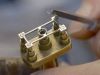
Thanks for the post, Marcus. Does the shock test only ...
If In recall correctly, it is possible to mount the movement ....
Two unique features were built-in ...

Marcus, this is a very important article...
Thank you, Magnus ....

fascinating read, thanks!
I will have difficulties to meet your standards, I fear ....
Love your article
LOL! Thanks a lot! ...

Never any reservations here...
A nice Patravi you've got here ....

very potent watches albeit
