Experts, please !! (5159 perpetual)
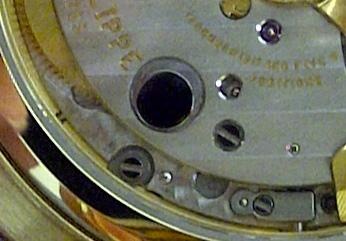

Not a problem
That piece works like a clutch (not sure of the correct horological term) that engages and disengages the winding rotor and manual winding. It is supposed to move; it would actually be a problem if it never moved!
Try winding the watch manually, and you will see it shifts; then try to rotate the watch so that the rotor get engaged, and it will move back.
Wig-wag pinion
I'm interested in more details...
I know from bitter experience that hand winding an ETA 2824 movement regularly will cause major problems with the reverser wheels jamming prematurely. I've had several of these movements and each one died in approx just under one year after hand winding daily (I rotate my collection and don't use a winder). My 3035 and 3135 equipped Rolex have endured several years of regular hand winding with no user-visible adverse effects so far.
How resilient is the Patek wig-wag setup to hand winding? I've tried in vain to get either an exploded diagram or more detailed explanation of exactly how it works and I'd love to know more about the finer points of this mechanism. It's the unseen things like this that really set apart the different calibres by high-end manufactures.
Many thanks
John
First off, hand winding automatic...

THANK YOU !!!!!
and please post more here 
Reading your post and knowing your login name I'm sure we can learn a lot from you !
Thanks again
Wig-wag pinion
Very interesting, thank you!
So this should be the Wig-wag pinion in my 5140 with 240Q movement, exposed so it is easier to see.

Similar but different;) This is...

Thanks for your very valuable input!
And I am looking forward to reading you more often, here.
Best,
Nicolas
Thanks for the insight! A few more questions..
Thanks for the insight! I wish manufacturers made it clear that daily winding could be a problem.
I rotate my watches daily so my automatics do not have along enough power reserve between wearing occasions. I have been hand winding my calatrava for the last year every evening to avoid having to reset. The lack of a hack function means setting the minute hand to coincide with the seconds hand is a real pain and having them out of sync on a centre seconds watch drives me mental. I guess I'll have to invest in a series of winders
I appreciate that the 324 is designed as a platform for more complex features but are there any stand-out features which apply to a 3 hand date Calatrava? While it is certainly thinner than a 3135 is it in any more sophisticated? The 3135 has a free sprung overcoil, variable inertia balance , efficient bi -directional winding, excelent shock resistance and an instant date change. What sets the patek apart other than finishing?
Just to be clear - I love my Patek Calatrava and can examine it for hours under a loupe - it's just that hard facts are hard to come by in this industry built on luxury marketing.
Perhaps we should ahve a separate technical thread?