
tee530
427

Not a watchmaker's answer....
...but it has been my understanding that in a basic wristwatch caliber, the two things to make as large as possible are the balance diameter and the spring barrel diameter. The first for better stability of rate/timekeeping, and the the latter for longer power reserve/isochronism. At the standard slow-beat of 18,000, these two component reach their optimum when they are about of equal size. For a round caliber with a traditional gear-train layout (second wheel in the center), this dictates that both the balance and the barrel can reach +/- 40% of the caliber's diameter, without making the movement unacceptably thick.
As the beat rate increases above 18,000, the balances get progressively smaller to oscillate faster, with a corresponding allowance (and requirement!) for larger barrels to cope with greater power consumption.
Happy to be corrected on any of this 
-Tom

A French watch: The Chronomètre by Jean-Baptiste Viot

Like a strange water painting...

Aha, now a face to a name
Thanks


very clever

I think I like how it looks in gold....

mind blowing

I want one!

This is wonderful news. I am excited also about the French revival in watch making

General

The movement seems Ok, but...

Very interesting and I have to admit, that I like the watch...

Very romantic watch

Thanks for the review..

nice
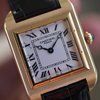
When I saw the first pictures

Extremely Compelling

A French Watch!

Thanks for the great details of this interesting French watch.
Thank you all about your comments.

I LOVE this piece!
How wonderful, Daos!
Congrats!

A basic horology question...
Not a watchmaker's answer....

Well done. More creation of beautiful mechanical watches...

very interesting with new things to see everytime you look
The Peseux 260
overlooked


Blockbuster
short visit
