
Baron - Mr Red
14613

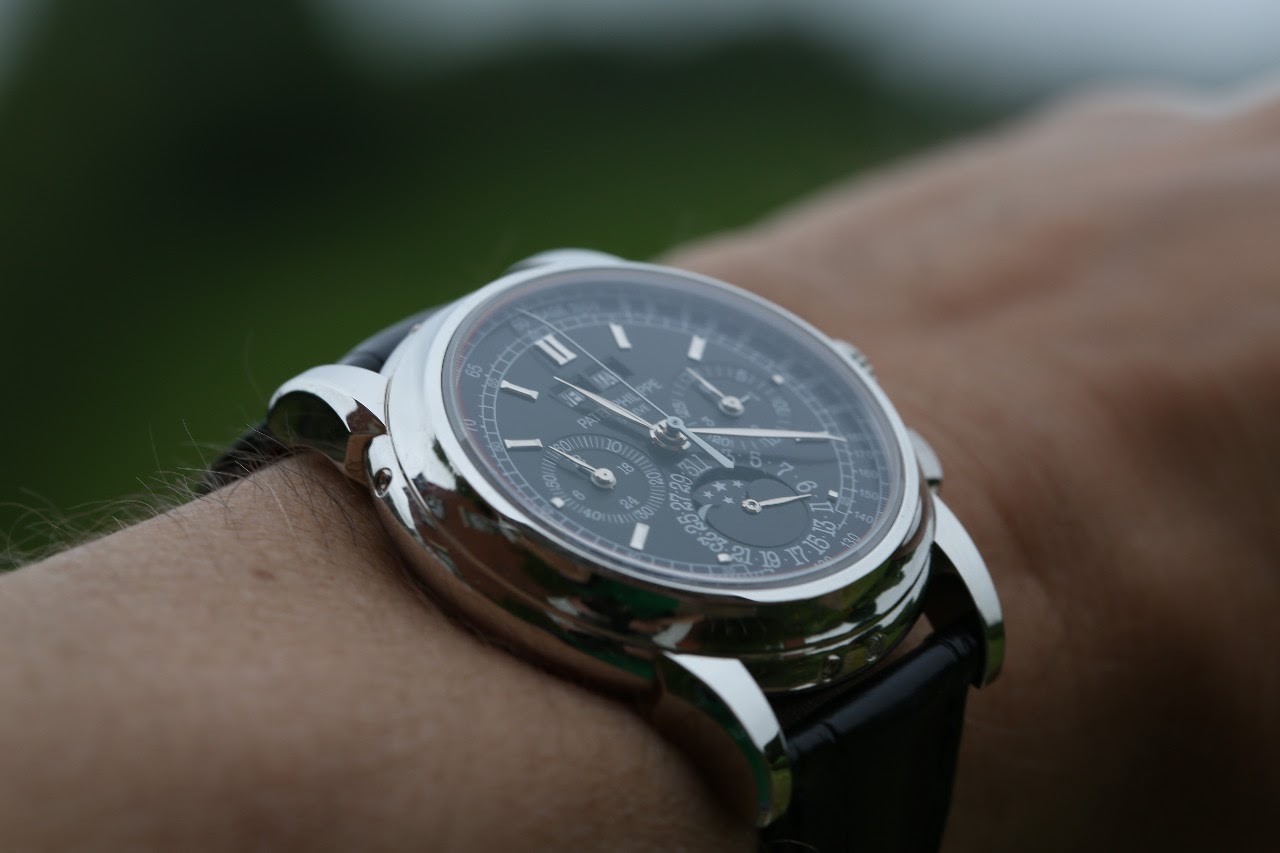
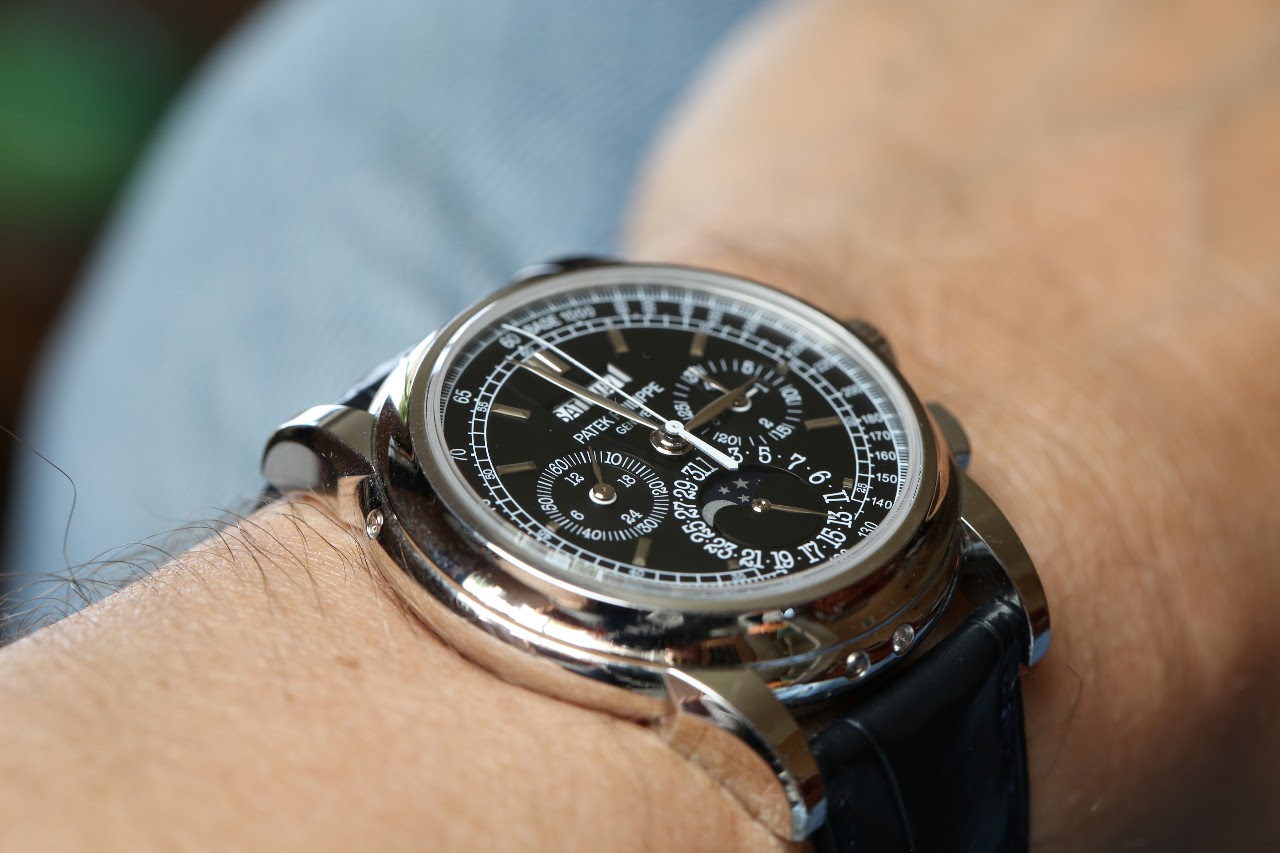
Patek Philippe 5970 - "cult status"
The most recent edition of the Patek Philippe magazine (Volume IV, Number 3) provided a fascinating article about the Reference 5970. The article described the 5970 as a watch with “cult status” representing the ‘quintessence of complicated watchmaking at Patek Philippe.” That is high praise indeed.
Many have argued that the perpetual calendar chronograph is the most important watch in Patek Philippe’s history. I think the origins of this type of thinking stem from the vintage classics; 1518 and 2499. These vintage references are icons. Indeed, many vintage collectors maintain that the 2499 is the most perfect watch ever made. It is in this context, that the 5970 needs to be seen - a modern day variant on a true classic.
According to the article in the magazine, Thierry Stern was tasked by his father with designing a modern day variant of the perpetual calendar chronograph to replace the 3970. As reported, Thierry Stern was told of the 3970 that “it’s a beautiful watch, but now you have to find a new design.” According to Thierry Stern, the 5970 that he designed reflected “all the passion, respect, and knowledge that I had for Patek Philippe.” So, in this sense, the 5970 represents an important historical moment, where father passes to son a key responsibility. That is certainly one factor behind its “cult status.”
The second factor that seems relevant in understanding this “cult” nomenclature is its rarity. Of all perpetual calendar chronographs, the 5970 has had the shortest production run. Produced from 2004-09, with the 5970J produced for just one year and the 5970P for just two years (G and R from 2004-7). Estimates vary to how many of each metal were made. Christies John Reardon is on record as stating a total production of around 2800 watches. It is truly difficult to split this into specific metals, but I think it is reasonable to assume that the white and rose metals are the most common, with 1000-1250 in each. I think the platinum version is likely to have 300-500, whilst the most rare is the yellow gold with 100-300. Whilst the 5970 has the shortest production run, the absolute numbers produced are higher than some of its vintage predecessors. For example, reference 1518 saw only 281 watches made. The 2499 saw only 349 watches made. The 3970, however, has production in excess of 4000 watches in total.
The third factor, for me, that makes the 5970 so desirable is its case dimensions. At 40mm (and 13.5mm deep), the watch has a very modern approach. Compare this with the 1518 (35mm), 2499 (36.2-37.7mm) or 3970 (36mm). I think it is also important to mention the depth. The 5970 sits prominently on the wrist courtesy of its depth. It is a trait that distinguishes it from all the prior perpetual calendar chronographs. So, crucially, the 5970 is a watch that is an absolute joy to wear.
The fourth factor, for me, is the 5970’s echo of the 1518/2499. The 1518 had square pushers. Both the 1518 and 2499 had the tachymeter. The 5970 echoed both these traits. Similarly, the dial symmetry is very authentic to the original. When one looks at a 1518 and a 5970 side by side, one sees a truly modern but genuine representation of the original classic - a watch that captures the true spirit of its original ancestor.
The final factor behind the “cult” image is the movement. I am going to quote the magazine here as it does an excellent job in capturing the issue.
“There is no doubt that the aesthetics of the Lemania chronograph ebauches add considerably to the appeal of those Patek Philippe perpetual calendar chronographs that use them. The harmonious and dignified lines of the bridges and levers provide a blank canvas on which to display the decorative techniques of haut de gamme Genevan watchmaking, and the reliability and durability of their design made them the chronograph movements of choice for as long as they were available. Patek Philippe’s in-house chronograph movements are far more technically advanced and are extremely captivating aesthetically, but there is a great deal of historical importance attached to the fact that the 5970 was the last Patek Philippe chronograph to use a Lemania ebauche.”
So, one can argue that the in-house movement is more advanced, but it is hard to argue that it is "better". In the same way that the engine of a modern DB11 is significantly more advanced than the engine of a DB5, one cannot say the former is “better” than the latter as appreciation is a multi-dimensioned phenomenon.
Perhaps there is a final final factor. Cohesion. It was once said that a camel was an animal put together by a committee. It is so often the case that, notwithstanding all the technical and design expertise that is available, when one puts together all the parts of a watch, it just doesn’t work well. Similarly, every now and then, design and expertise can come together in a synchronicity that produces something quite extraordinary. I think that is a very good synopsis for the 5970, and just why it is described as having "cult status".

Patek Philippe 5970 - "cult status"


It's the best modern perpetual+Chronograph

No doubt on this one,

Have not read article, waiting for my copy. The 5970P is a beauty!

It is hard to tell
Hi Mark,
That's indeed the difficult part



The 5970 is indeed the pinnacle of Patek's PCCs.
i think metal choice is very hard with this one....

I rest my case. 5970 is King :).

With Miles' Salmon G and the Black P, you have my favorite Patek PC Chronos.
Nicolas.....but to put you on the spot.....

5970 for me
yep.....I go with that too.
I have to agree, much as I absolutely love the 5970.

That's very informative read...makes it easier...to look for a grail PCC.
Same here.
Hard to switch...if I have the 5270.
Completely understand tour position.
not disimilar......

Very well put and summarised, Joe
well.....that would be quite a catch.....
Definitely an icon for Patek
Wise words, Mark
Exactly Joe
I've been a member of this cult--sadly, not as an owner, but as a big admirer--since the 5970's release.

Joe ( as well as most people here ) you are totally smitten with this watch
IMHO 5970 is a perfect watch, in any metal. While the 3970 has the DNA of the legendary 2499, particularly in the style of the case, which
Many thanks Patekova....
Yes, tastes/styles change, but some watches that haven't been produced in years have a "timeless" quality and remain contemporary enough to continue to be coveted.

Congratulations!
Fricks....

Really comprehensive post Joe. When i buy a grand complication ill take note of this model in the future.

5970 Pasta timer
I guess we are all different.....

an iconic and classic chrono from Patek
Yes...georgeszaslavsky...Patek themselves call it a watch with "cult status". They are obviously very proud of their history and of this watch......and rightly so.
For once I will have to agree with Patek.
