
amanico
[JLC Moderator]
400402

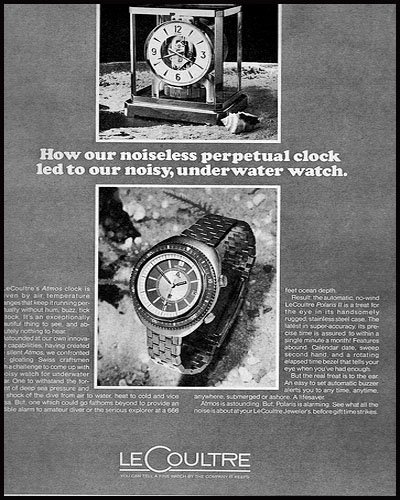
An In Depth review on the Polaris II, ref E 870.
' 
This is certainly the less known watch, among the Polaris Family.
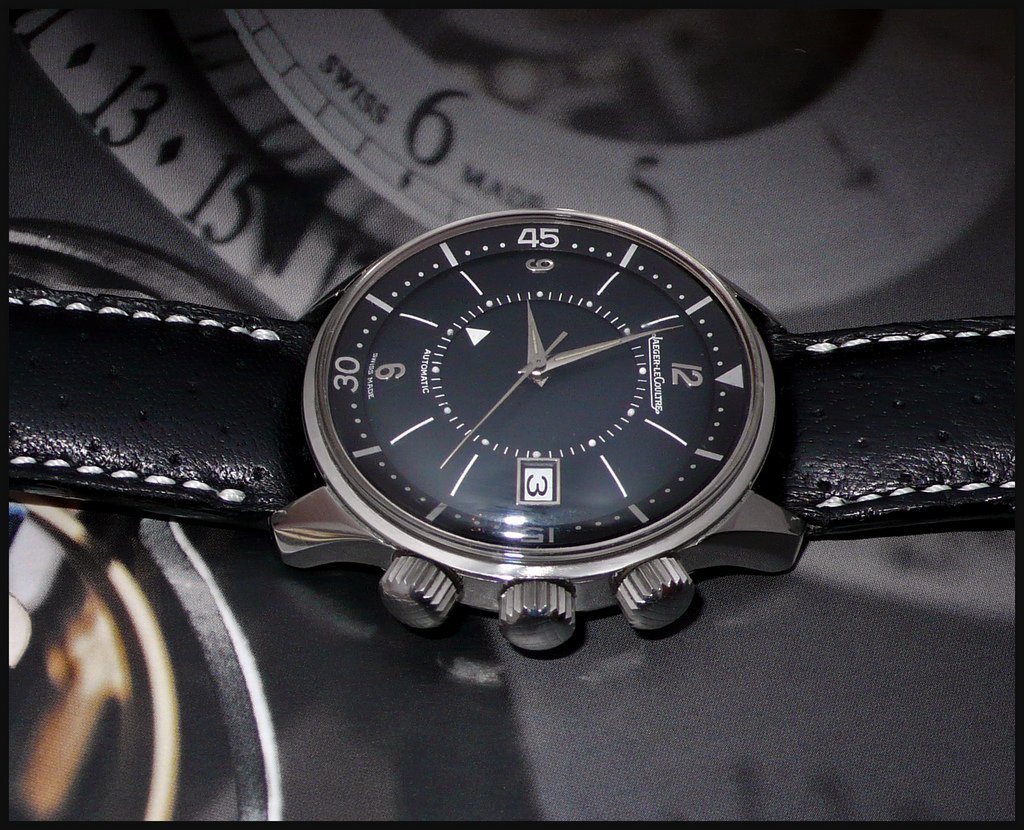
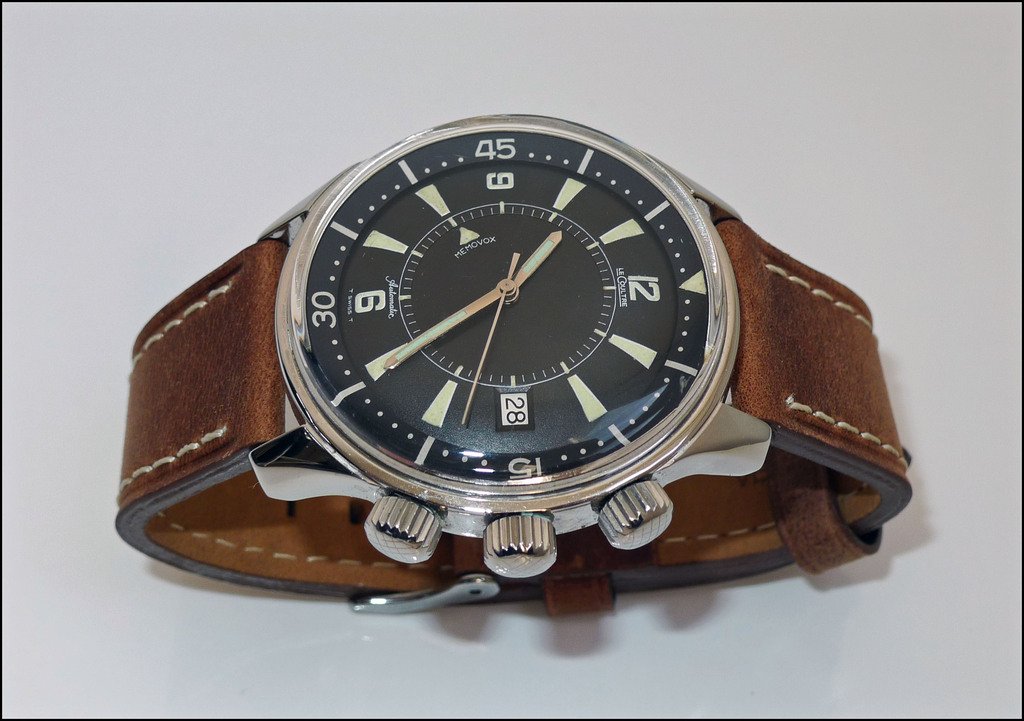
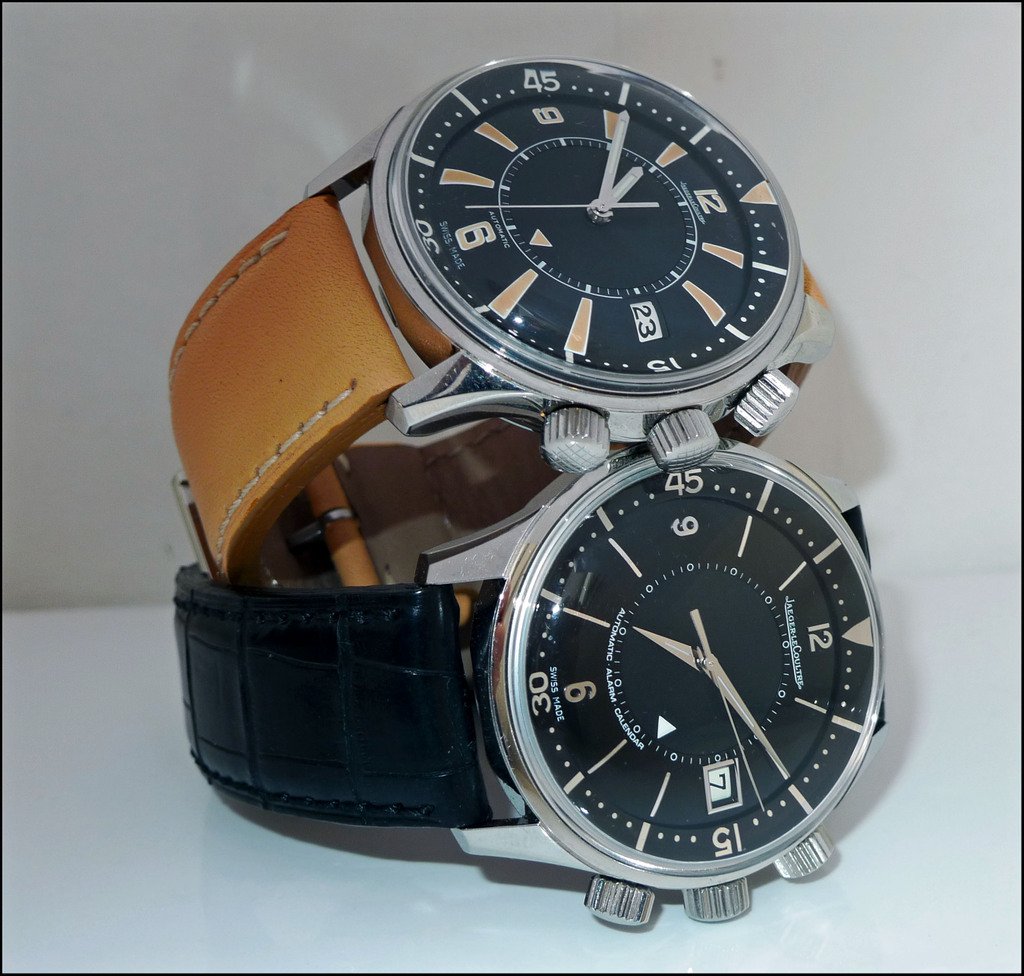
Indeed, you all know the Polaris versions, from 1965 and 1968, which were re edited last year.
The Original Polarises:
1965:
1968:
The Re Editions:
But what we less know is that, from 1971 till 1975, JLC released another Diving watch, the so called Polaris II ( for the US Market ), while it received the reference E 870 for the European Market, and were quite rare, as only 1120 pieces were produced during this period.
So, with this watch ,the JLC Diving Episod ended, to re born in 2002 with the Master Compressor Memovox.
1/ Aesthetically speaking, this is a very curious watch:
The Polaris II is indeed a very hard watch to appreciate in pics.
Its curious ovoide case, the absence of lugs, the 14 angles of the bezel, and the eggshell case back contrast with the more classical round dial and bezel, even if there are things to say about the dial...
Look at these pics:
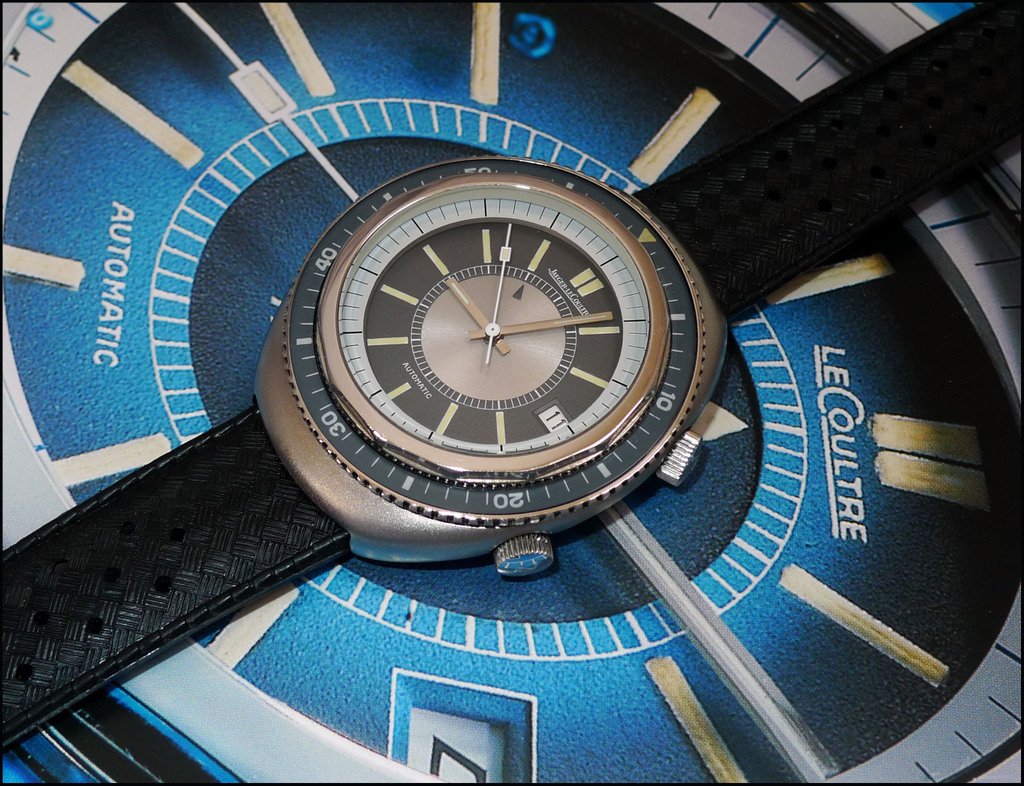
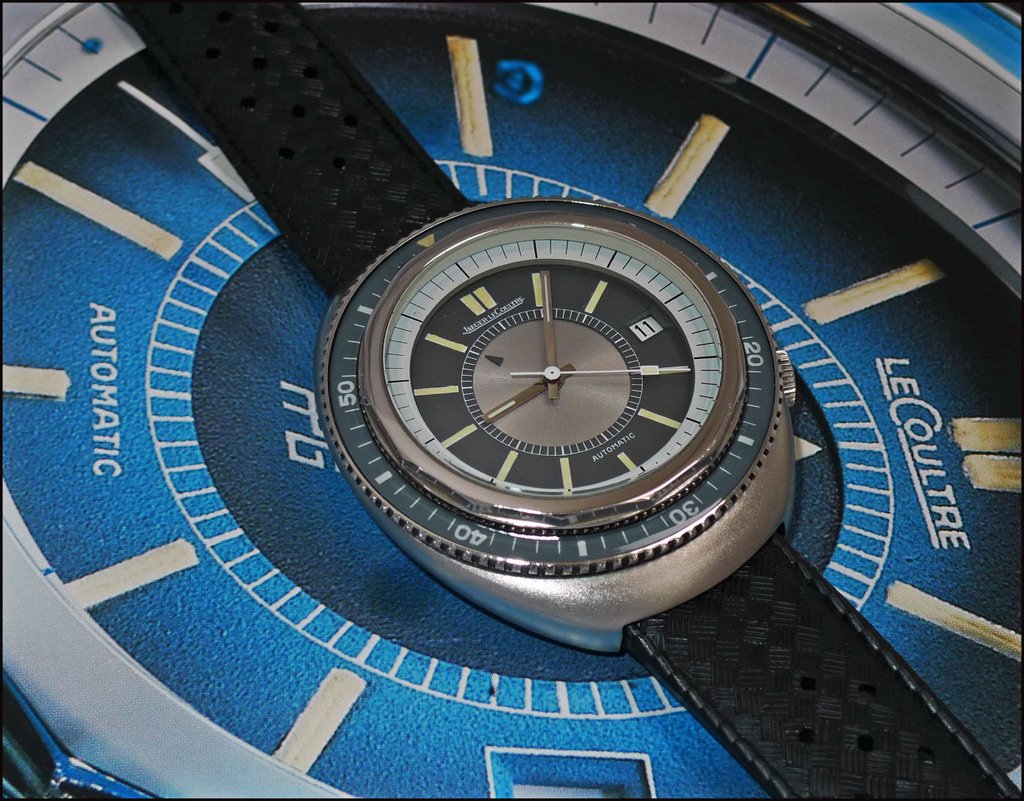
This is obviously not really a photogenic watch, in pics.
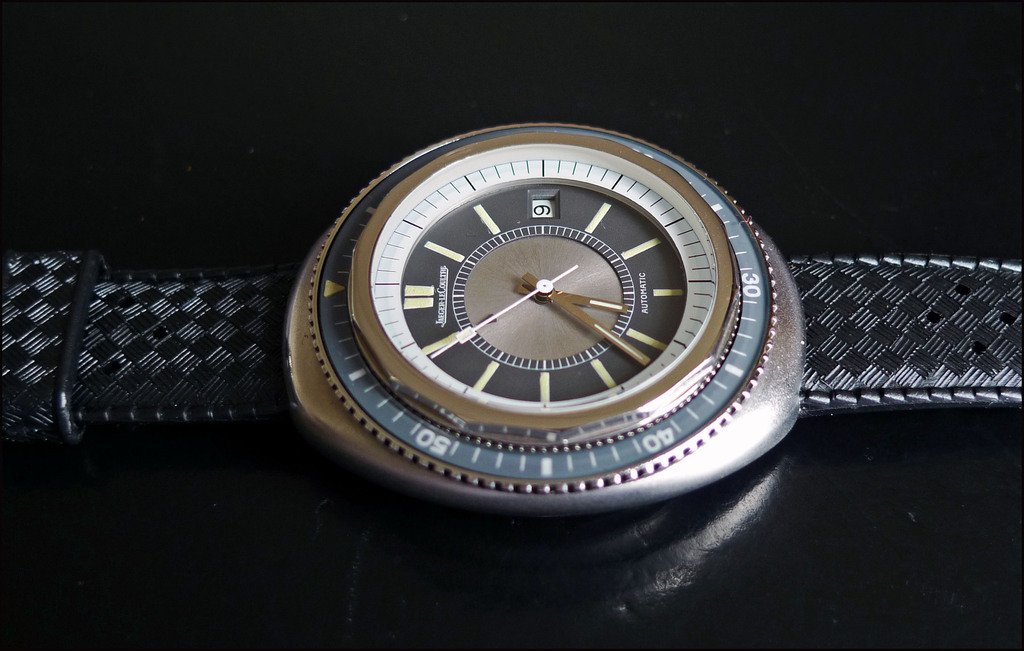
We may even say " Awkward ", if we pay attention to these different geometrical shapes, and if we have in mind that the Polaris II is a big watch ( 43 mm ) !
Awkward, maybe, but strong, brutal, and why not, in a certain way, charming, and it shares this particularity with some other realisations of the same era, the 70ies, like the Blancpain Fifty Fathoms, which came with a very funky orange bachelite bezel .
It is not an easy beauty, something you immediately appreciate, it will take time.
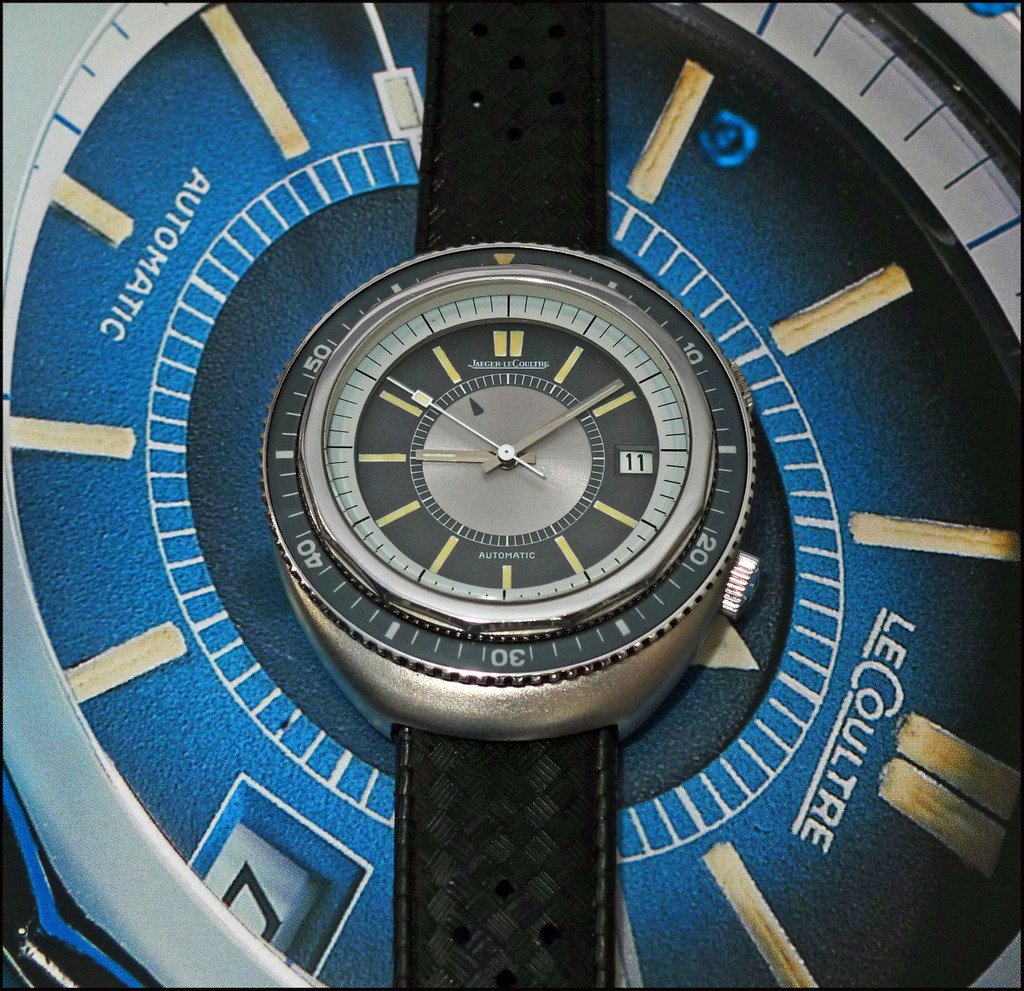
Curiously, under certain angles, the round dial overrides the ovoide case and the angular bezel, as shown below:
It is also a thick watch, not as the Polaris E 859, but quite impressive, due to its multi level construction:
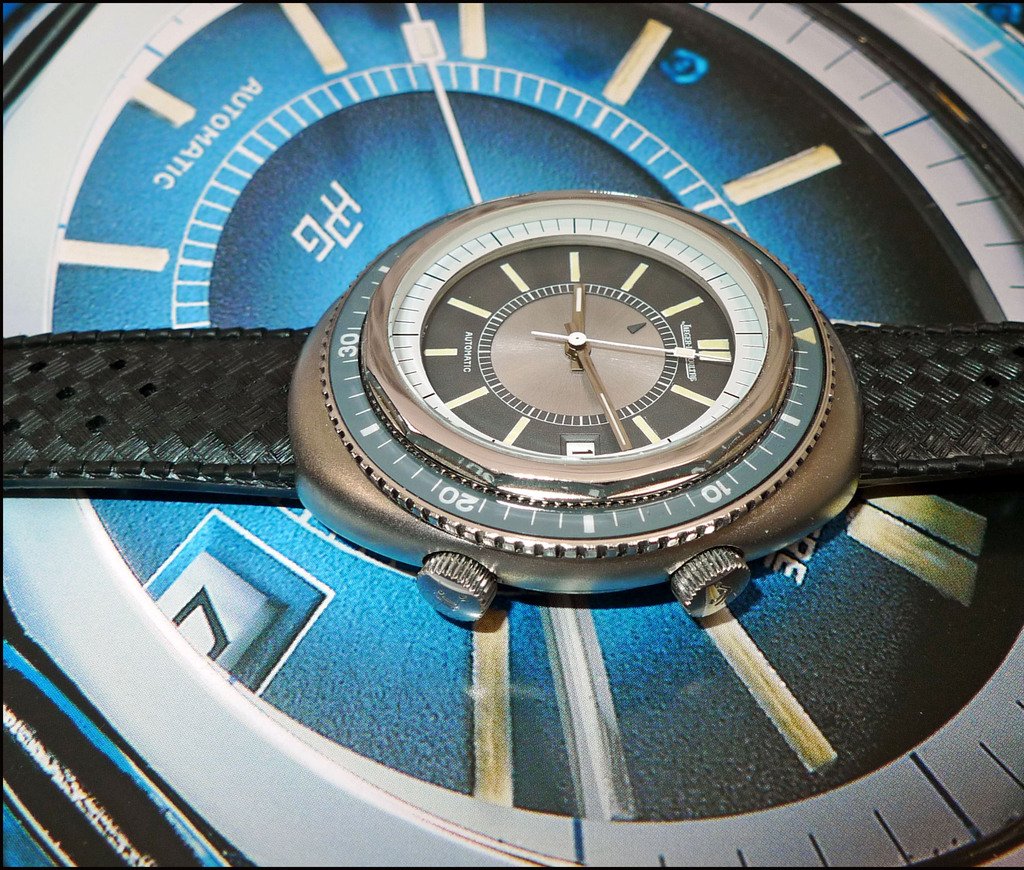
On this last pic, it is even more obvious:
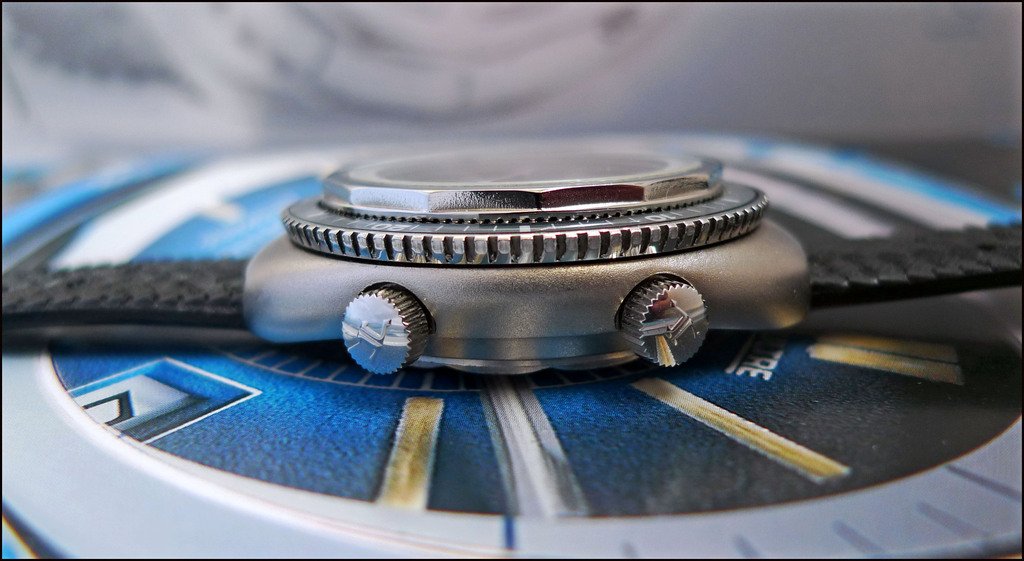
You will also notice the sandblasted finish of the case, giving a matt look to this watch, and the perfect integration of the 2 signed crowns in the case.
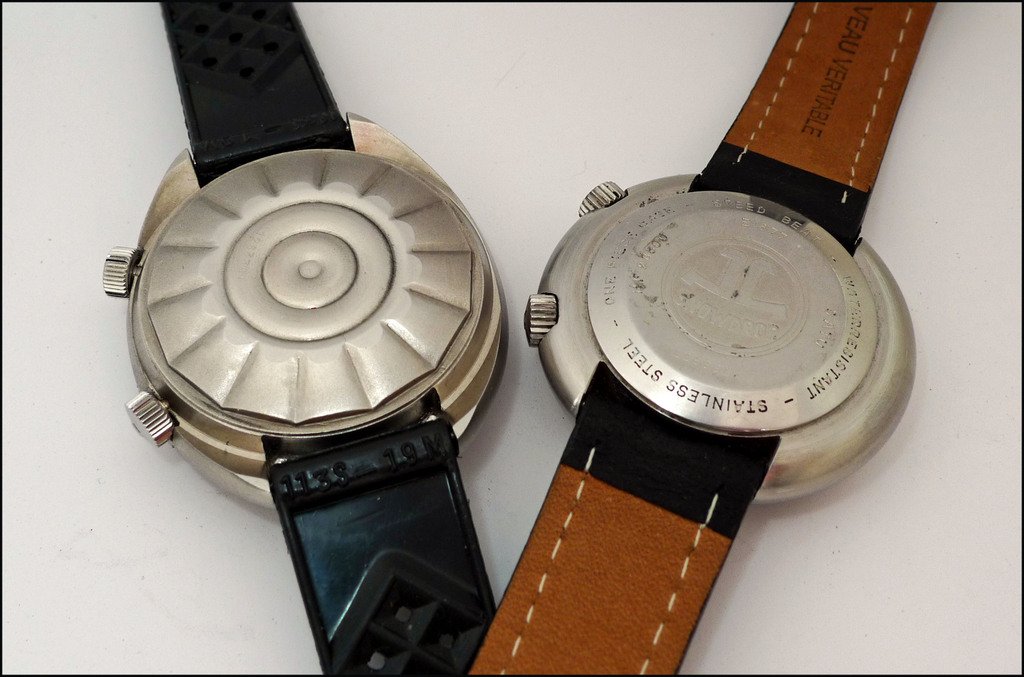
The case back plays the card of the originality, too, with an evident eggshell inspiration:
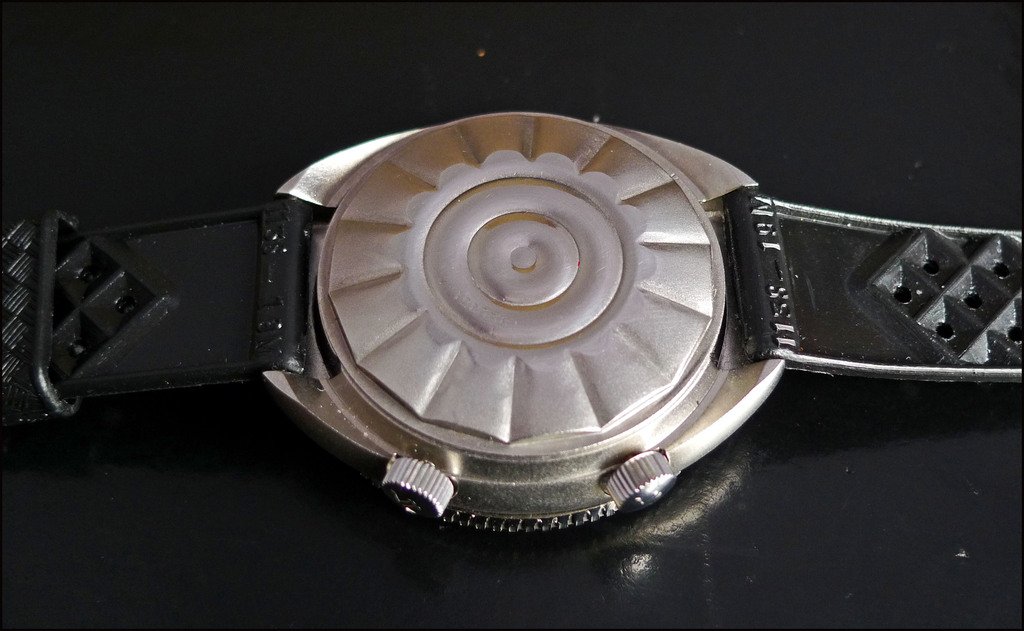
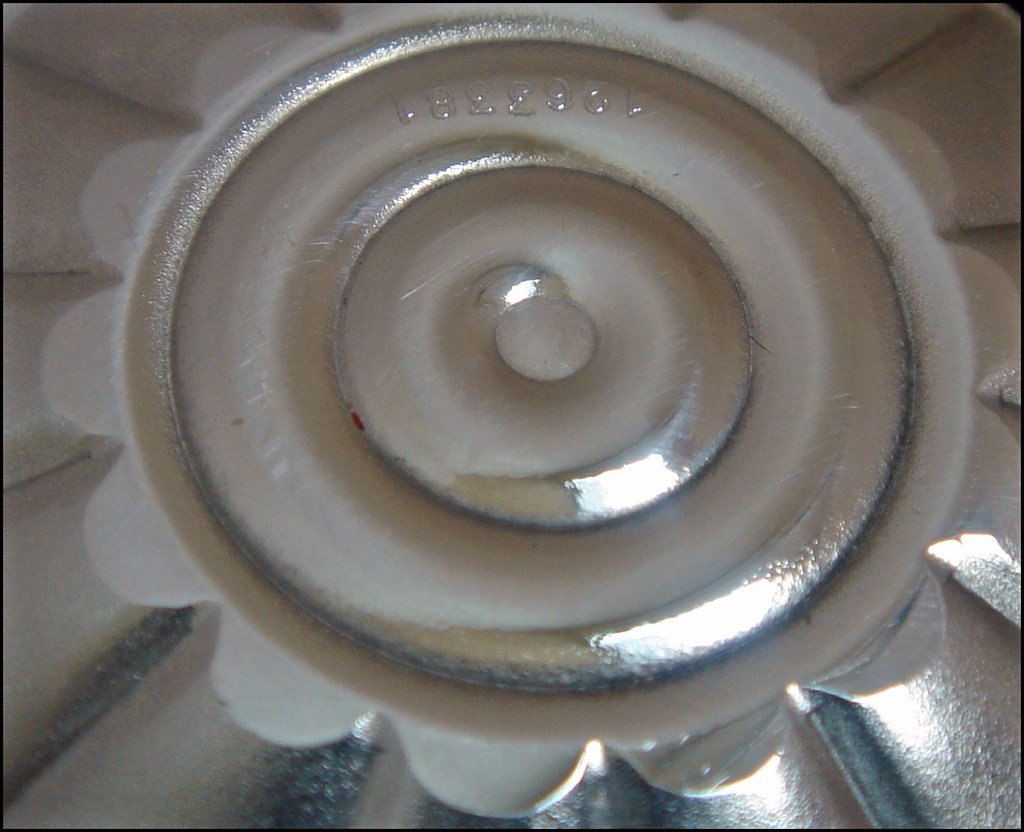
Now, I compared it to another close reference, the Snowdrop ( E 877 ), and even if they have an " air de famille ", they are both very different:
They share the same angular shaped bezel, actually bigger on the Polaris II, both don't have lugs:
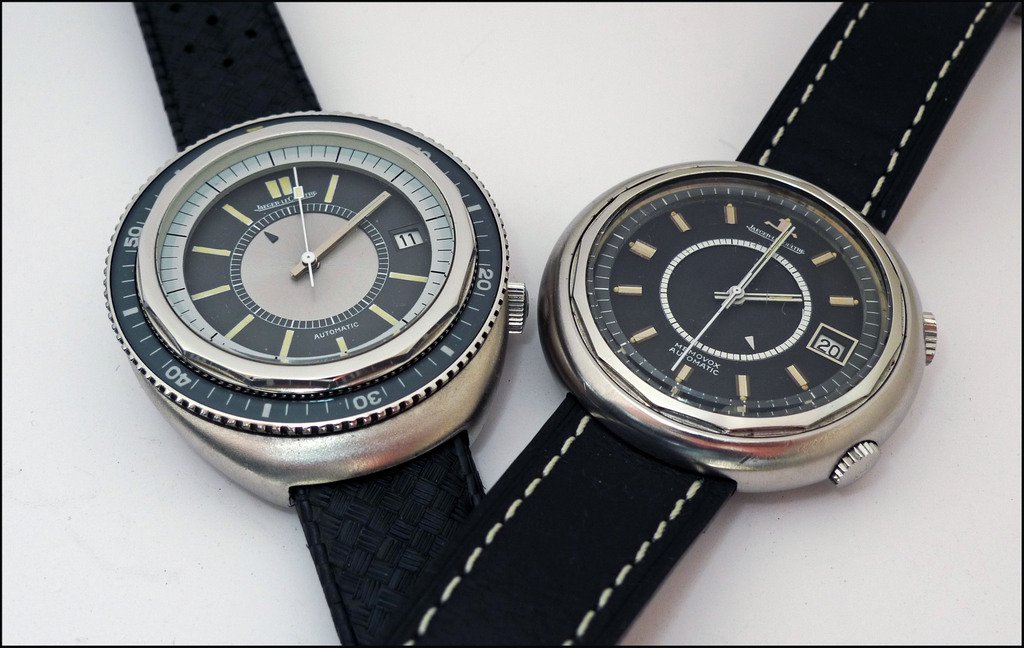
The 2 signed crowns are here too, more integrated on the Snowdrop, the case is more round on too, on this last one, and the 2 case backs are way different.
:
The dimensions are very different, the Polaris being bigger II ( 43 mm ) while the Snowdrop has a 40 mm case, and much thicker, too, as spectacularly shown below.
The Polaris II case is more " ovoide " while the Snowdrop is more round shaped, the first receiving a sandblast finish, the last being brushed.
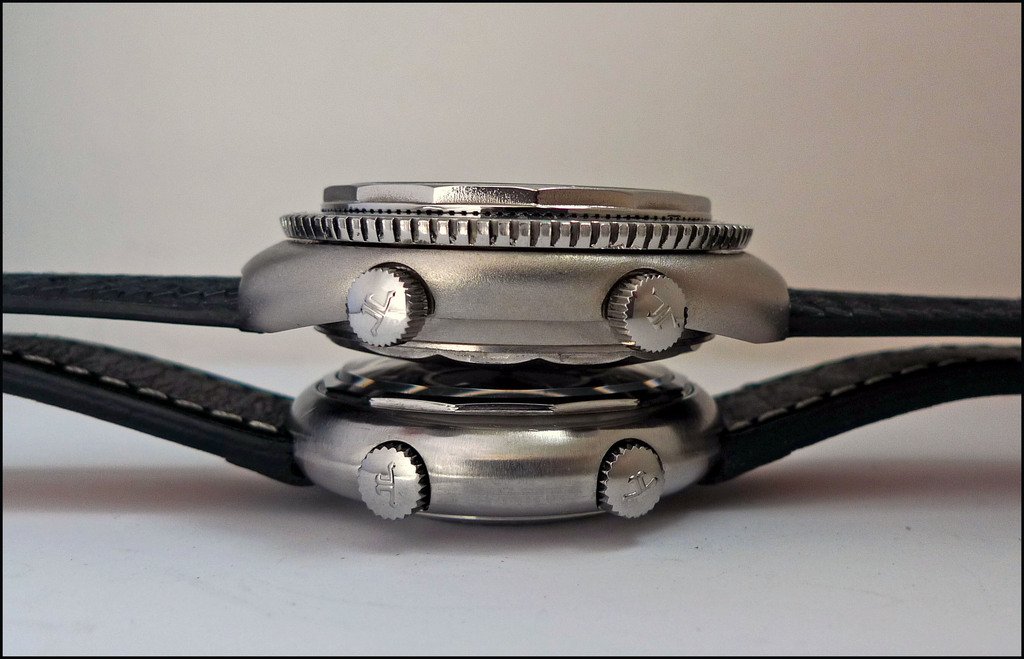
Things are looking more classical when we speak about the layout of the dial, indeed.
At least when you pay a quick look at it, because when you study it more deeply, you will see some interesting differences.
First of all, to be complete, it must be said that the Polaris II came with 3 dials, the grey, like mine, the more known blue, and the red burgundy one.
Here, the most famous blue dial:
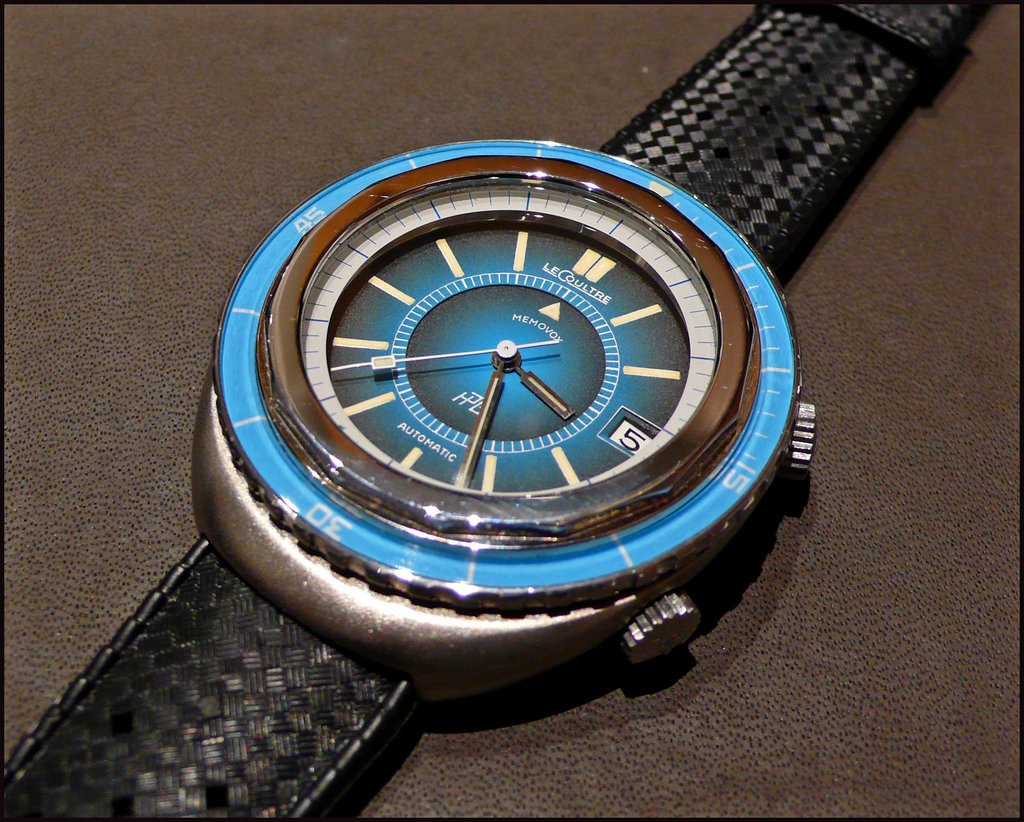
And there, the Burgundy dial:
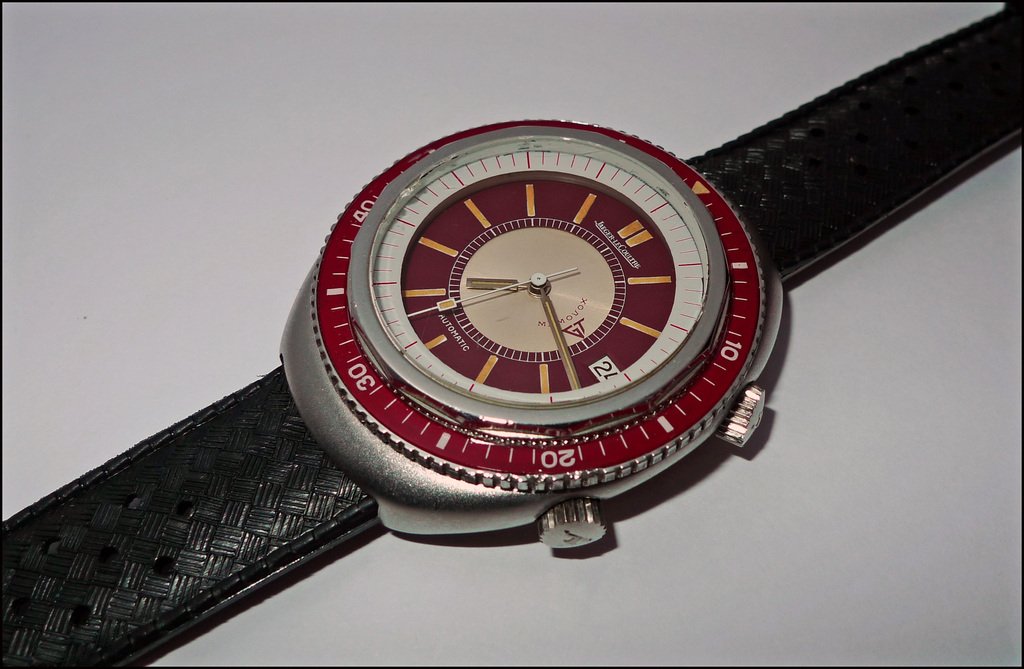
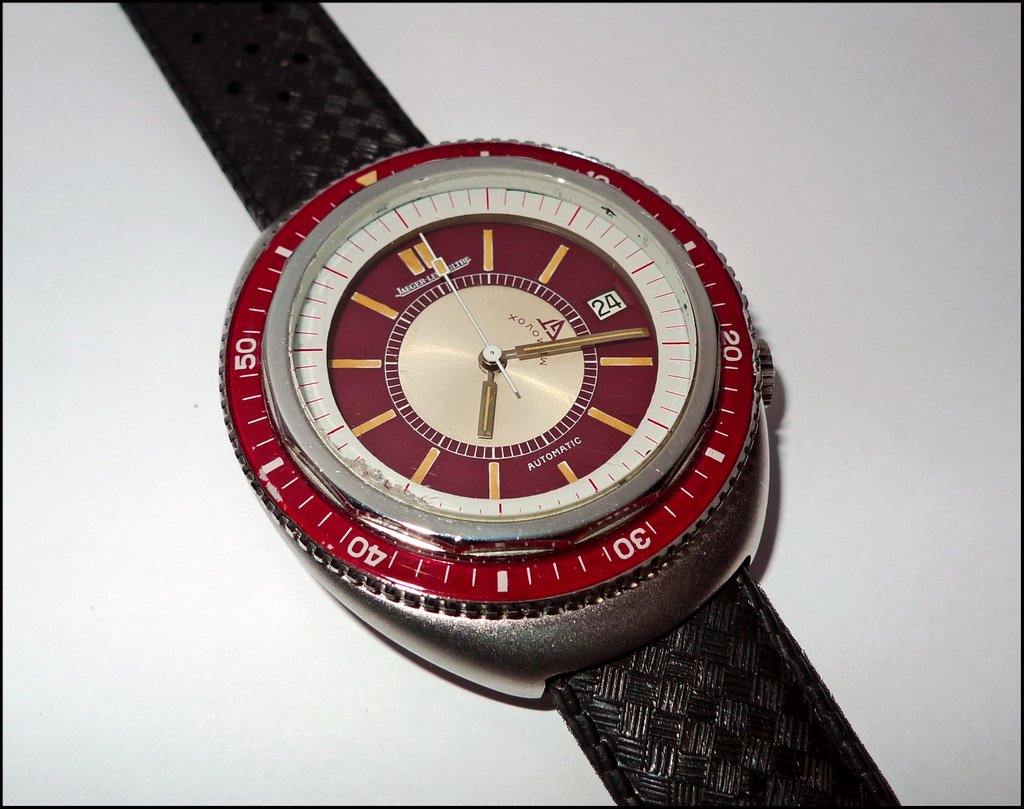
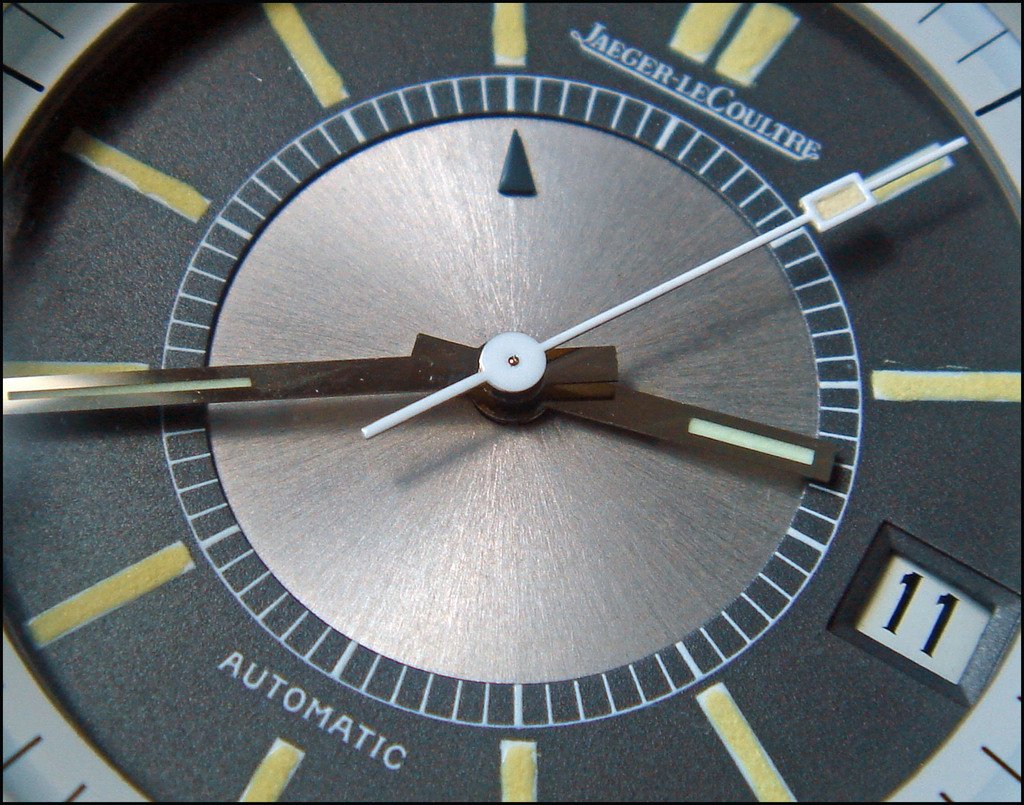
While on the E 877 Snowdrop the dial is flat, here, on the E 870, the outer white part where the minute indexes are located is above the rest of the grey dial and of the silver alarm disk:
Look at the blue dial on you will notice that there is a small writing on the alarm disk " HPG " which stands for " High Precision Guaranteed ".
You will find this writing only on the American, hence Lecoultre, models.
On the European models, there is nothing written, or, according to the Manufacture, for the French models, " GT " ( stands for Grande Taille, as you can see on the Burgundy Polaris II pics I posted above  .
.
.So, on mine, which is an european model, there is no writing at all on the alarm disk.
The triangle, which is used as a repere for the alarm, may be in tritium ( like on the Blue Polaris ), or not:
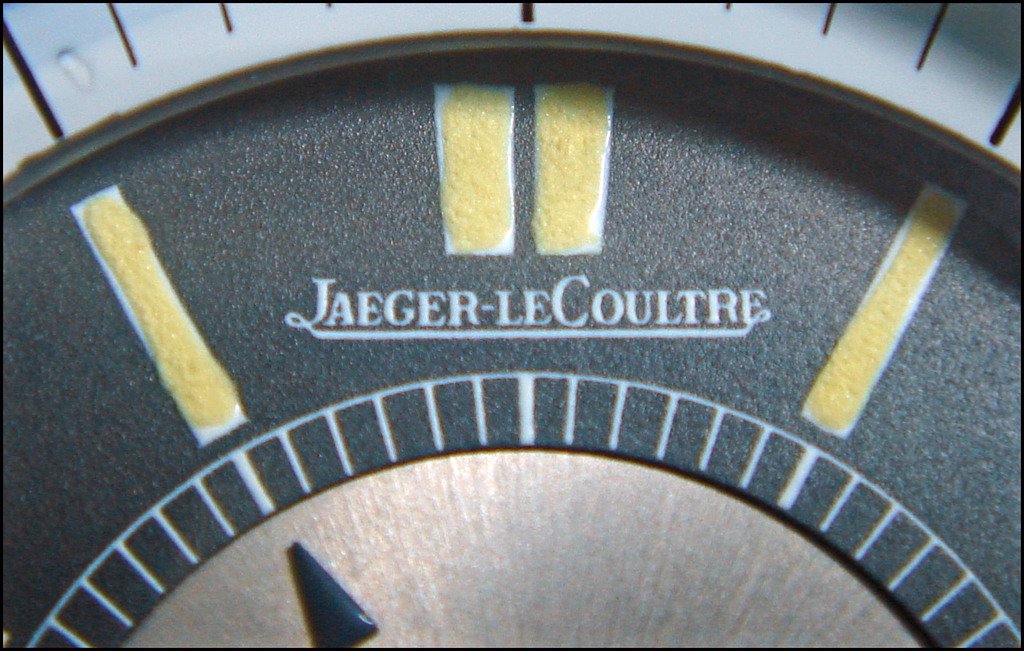
The big indexes are made in tritium, and on mine, in perfect condition:
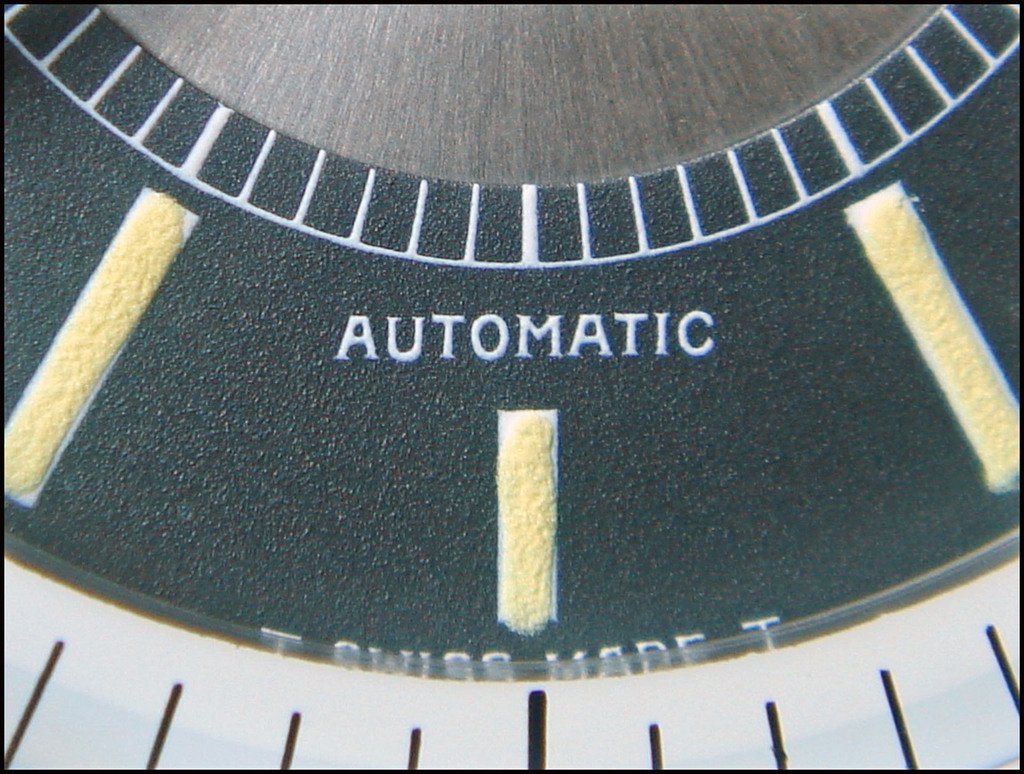
It is funny and strange to notice how the color of a dial may change the overall look, spirit and character of a watch.
In Blue or Burgundy, the Polaris II is looking very 70ies, as the color enhances this characterisitic.
In slate grey, this is a totally different watch, sporty, original, but also elegant, too.
the contrast between the silver alarm disk and the slate grey dial is also dynamized by the white outer part of the dial, a bit above.
All in all, this Polaris II is a surprisingly lovely watch to wear, very comfortable on the wrist ( I had some doubts, because ot the " eggshell " case back ), very well centered while wearing it, and the dimensions are still very reasonnable:
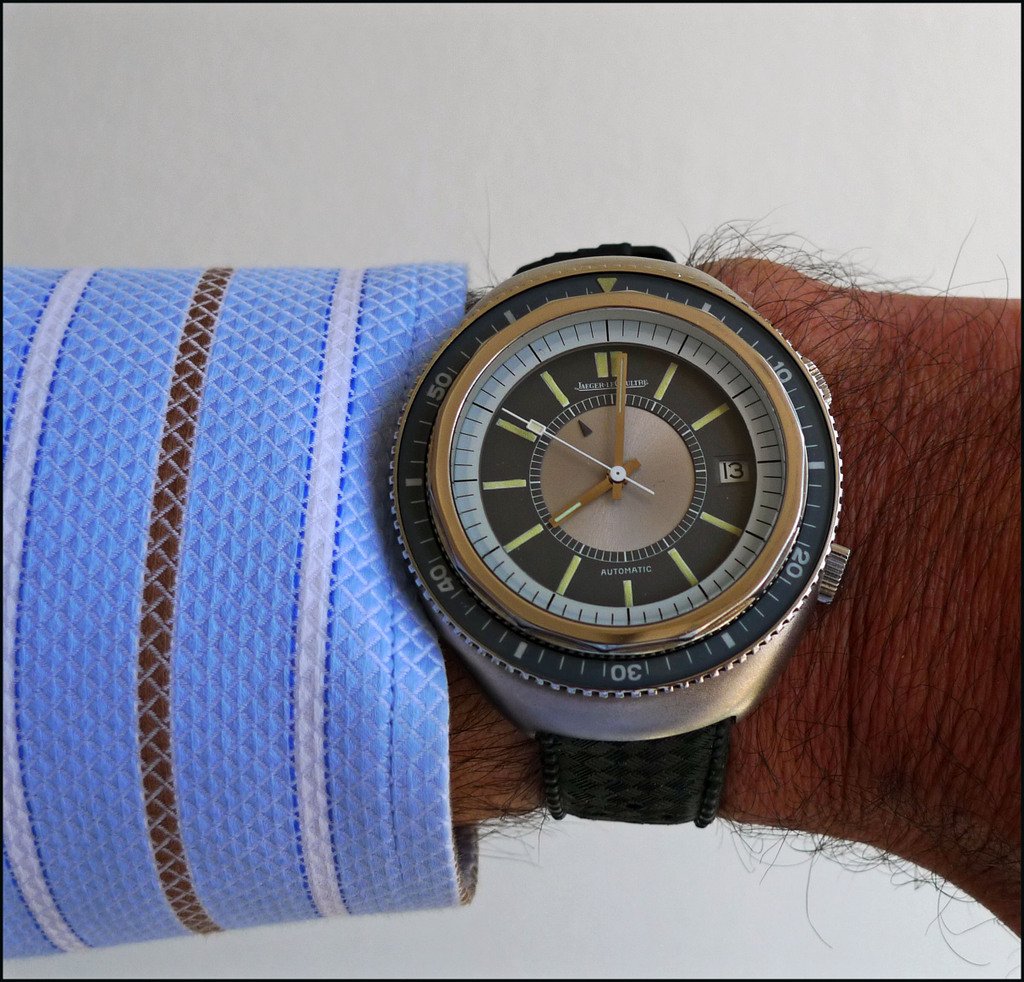
2/ An improved version of the Polaris Ref E 859? :
- Aesthetically speaking, this may be discussed, as it is a matter of taste.
Personally, I prefer the Polaris I, with its sweat and timeless round case, its very domed plexy, and even the layout of the dial, the gridwork on the crowns.
It is a bit like a " fight of generations " the 60 ies against the 70ies.
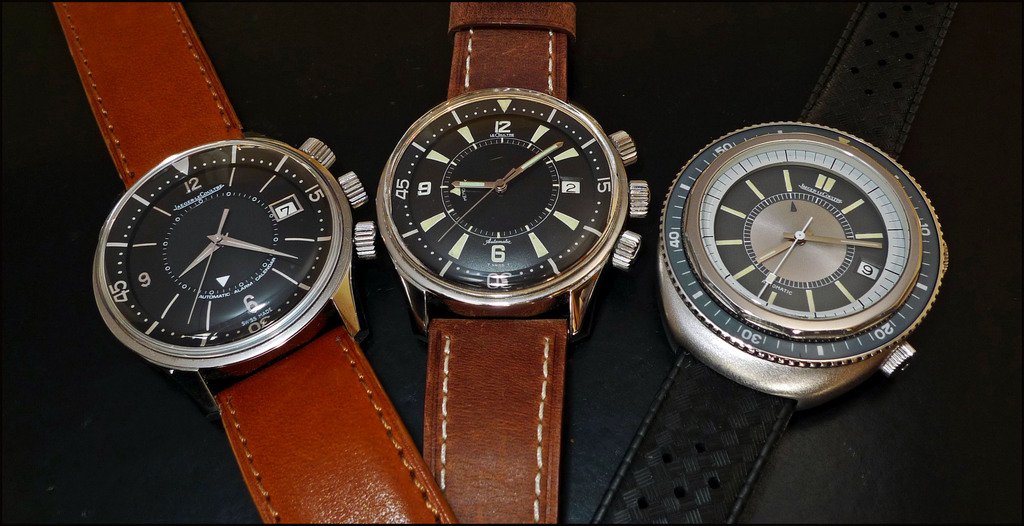
Here, the Polaris 68 with the Polaris II:
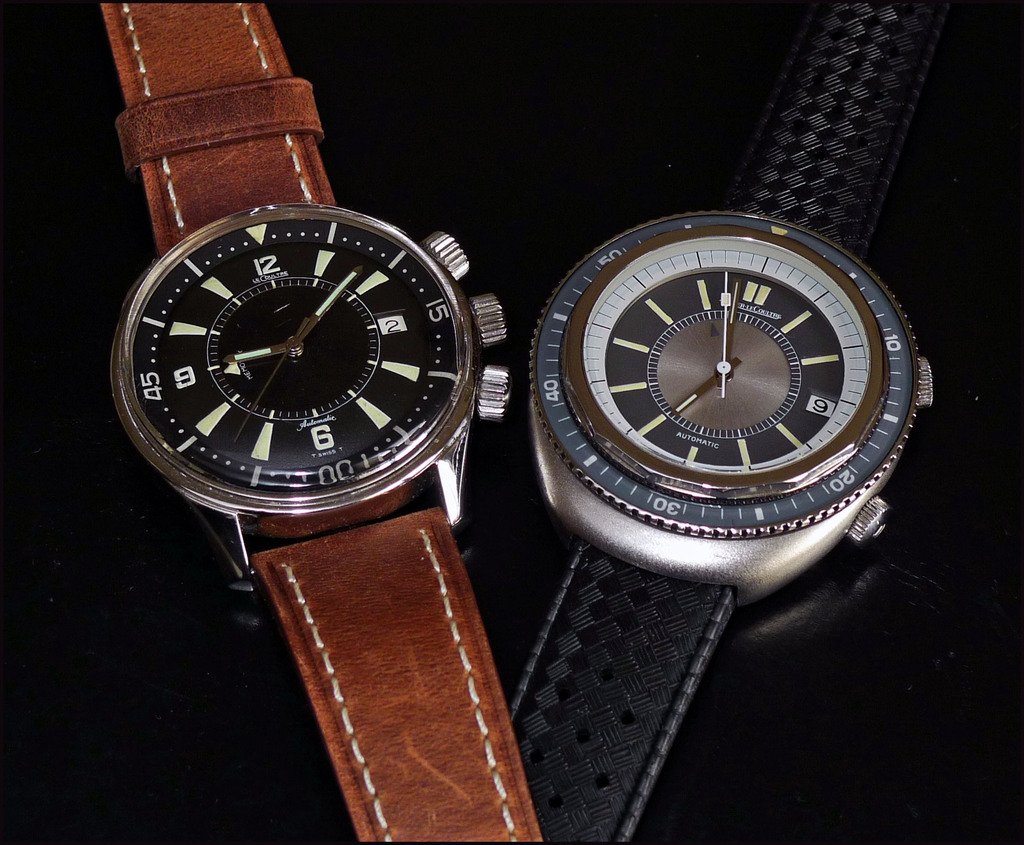
And now, with the Tribute to Polaris 65:
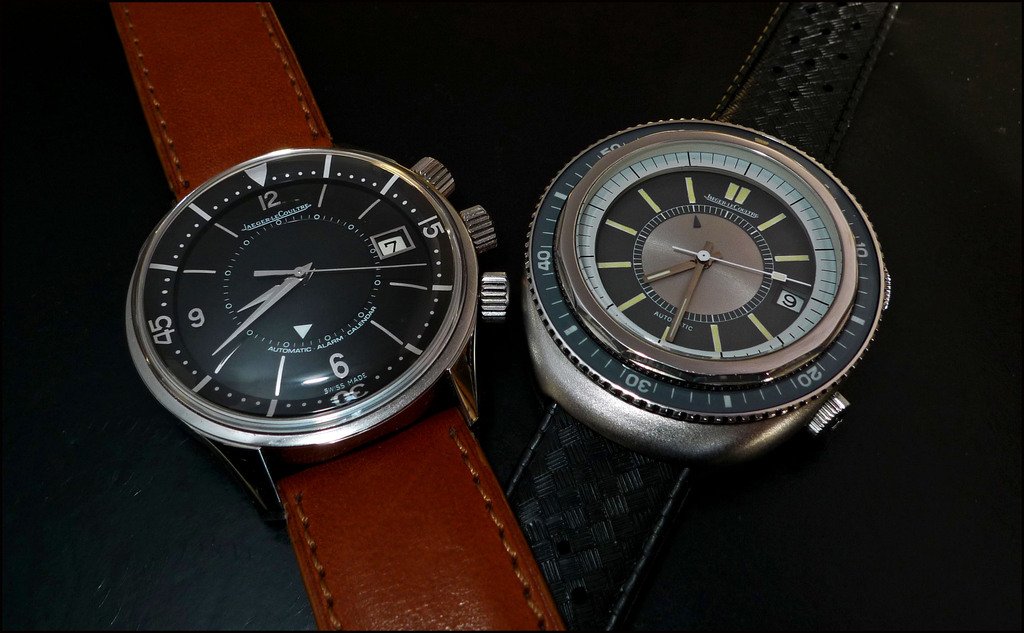
I think that for the era, it was considered, at this moment, as an aesthetical improvement, compared to the too wise looking Polaris, but 40 years later?
- Which is certain is that, mechanically speaking, there is a big improvement.
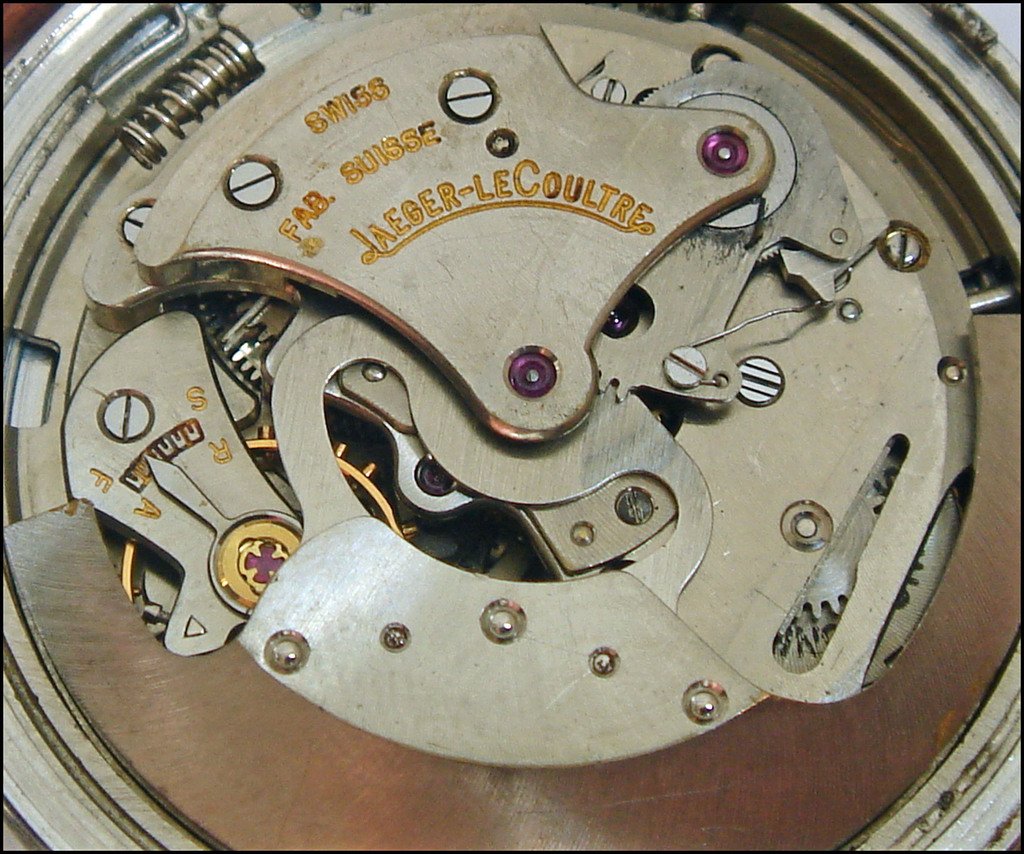
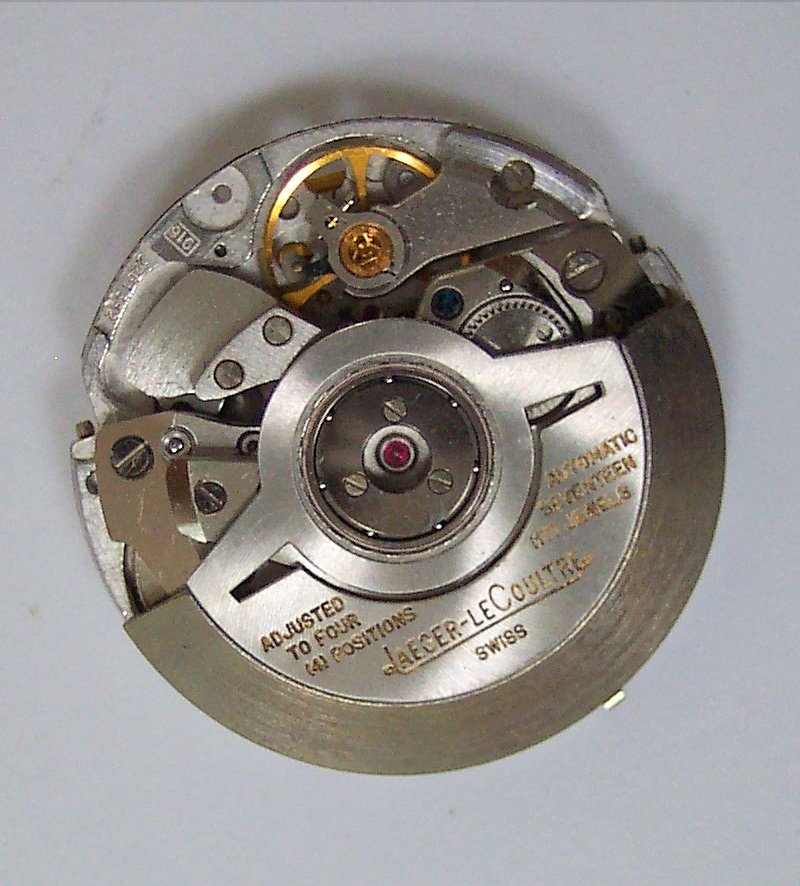
JLC started from the Caliber 825 to, in a certain way, modernise it.
We have the same number of jewels, ( 17 ), the Caliber 916 goes down to 13 lignes instead of the 14 of the Cal 825, both have the same power reserve ( 45 hours ), and the Alarm in both movements lasts 20 seconds, and you have in both cases to move the hour hand from 10 PM to 3 AM to set the date ( which is a bit painful, I have to admit ).
So, where and what are the improvements?
While the 815 / 825 were the first Bumper automatic movements, the 916 is the first 360 degrees rotor automatic movemen, which has an incidence on the noise.
While, on the Cal 815 / 825, you hear the matt " dong dong " of the bumper when the watch moves, with the Cal 916, you hear the usual more modern, but less romantic wobble of the rotor.
From 18 000 vibrations per hour, we now have, with the 916, 28 800.
Hence more accuracy.
This cal iber was that good that it may be considered as the Father of the Caliber 918, housed in the ...Master Compressor Memovox ( 2002 / 2007 ).
The Caliber 815 ( the same than the 825, without date ):
The Cal 916: ( Don't know who to credit for this last pic )
Another different thing between these 2 movements is the sound of the Alarm.
Lower, on the Polaris, it sounds like a big frog, while on the E 870, it is sounding much more like a ...Cricket.
Another improvement can be seen by the use of the sapphire glass, instead of the plexy.
Here again, less warm, but more resistant to scratches...
Conclusion:
The Polaris II is a true Memovox, with a familiar looking dial ( even more in its grey configuration ), and an original Polaris, very 70ies looking, with a strong and lovely personality.
It is indeed dign to belong to the Polaris Family, and it was time to give it justice!
Best,
Nicolas
This message has been edited by amanico on 2010-05-17 06:51:53 This message has been edited by amanico on 2010-05-20 13:27:47

Vintage
Explore the Jaeger-LeCoultre Memovox Parking Ref. 3161, a vintage alarm watch designed to save you from parking fines, with insights into its design and history.
33 replies15885 views

Vintage
Discover vintage Jaeger-LeCoultre treasures: the Polaris 65, a 70s chronograph, and the ultra-thin Calibre 145 pocket watch from the Heritage Gallery.
53 replies13457 views

Reference Guide
Explore Jaeger-LeCoultre's diving watch history, from the rare Memovox Deep Sea Alarm to the iconic Polaris. An in-depth guide on JLC's dive watch legacy.
111 replies82413 views
Review
Explore amanico's in-depth review of the Jaeger-LeCoultre Master Control Memovox Timer. Discover collector insights on its design, movement, and alarm complication.
58 replies24195 views

Vintage
Explore 1960s LeCoultre Memovox ads with blomman Mr Blue. Discover North American marketing, varied names, and the rarity of JLC ref 3160.
13 replies9437 views

Vintage
Explore a detailed review of vintage Jaeger-LeCoultre diving watches, including the Deep Sea Alarm and Polaris, with insights into their rarity and history.
71 replies36325 views
An In Depth review on the Polaris II, ref E 870.
' This is certainly the less known watch, among the Polaris Family. Indeed, you all know the Polaris versions, from 1965 and 1968, which were re edited last year. The Original Polarises: 1965: 1968: The Re Editions: But what we less know is that, from 197...
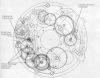
Fantastic as usual Nicolas
Thank you. You're putting the alarm complication subliminally into my mind...
Subliminally, Damien? ...
Wait, my friend, I still have some " alarming " threads to post... Don't you think that the Alarm is as friendly as it is captivating? what I find really stunning and impressive is all the Richness and the Diversity JLC demonstrates in the development of ...
What an
alarming warning from one 666 to another (aka the omen). I must confess I briefly owned the first compressor alarm but my heart has always been with the memovoxes. But alas, the Duometre's siren call is far stronger.

i am jealous, my friend....
... thank you for bringing us this wonderful review, very educational actually. have seen this Polaris II before, but did not know it has very interesting story behind. one amazing thing is that you mentioned there was only 1120 pieces produced during 4 y...
Some elements of answers...
Yep, 1120 pieces on a 4 years period. I was on to buy the red dialed Polaris II, indeed, but I passed on it as I already own the Grey dial, which is in stunning condition. I sawq several blue dials, 2 red Dials, and only one grey dial, which seems to be, ...
thanks for additional data...
... haha... yes indeed these vintage JLCs are getting to drive me crazy!!! so much fun, it seems never ending, my friend... stefan
An endless story, my friend, but a nice one. :)
It seems that your journey is longer than expected, Stefan... Have fun, that's the most important! Best, Nicolas

HUHHH
Huge congrats for the post, and the infos. I have only one bad picture from the red dial version. Excellent post Nicolas, excellent ! King Regards, Milan
He He, Milan.
The Red dial, as well as the grey, are real rare birds, my friend.... Happy to know that you enjoyed the post! Best, Nicolas

Oh, Vlad…
You just made my day! Or ruined my good nights sleep… Depending on how to look at it! Thank you Nicolas for a great review and stunning photos! Very interesting and education – love it! The first photo of the org Polaris -65 will haunt me in my dreams to ...
I totally agree with you on the difference you make between the Polaris I and II
The Polaris '65 is just a grail, an obsession for me, and the one I posted here belongs to one of the Heritage Gallery member....Lucky Guy! I thought a lot about what color of dial to choose, and after having seen the 3 in the flesh, I opted for the grey ...
I did a copycat photo…
I did a copycat photo of my TTP-68 and the Egg. Even if the PII and the egg has the same case measures, the Egg appears as much smaller than the PII, mostly because of the bezel shape and colour, IMO. The human mind is very strange! I have exactly the sam...
In real, Blomman, 2 mm make a big visual difference.
Take any 40 mm watch and compare it to a 42 mm, you will see a huge difference. Well, about the Concorde Ad, I would have to pick 2 watches to make it, not only one, and if the E 855 is not too difficult to find, the E 861 is a bit more diificult to find....
Well, you are right…
And you are right! 2mm is a big difference. To hunt them in a certain order would be even more difficult than just hunt them…! The PII is definitely one to hunt! Best, my friend Blomman

Thanks, Nico..
..thanks for the case back photo! The grey Polaris II is a great choice. Any inside shots? I'm intrigued by the construction of this case.
No, Ben. No inside photo, my friend.
As I didn't want to ruin the bezel, which is in mint condition. But when I give it for a service, I will ask my wathcmaker to let me take a pic of it. Best, Ben. Nicolas.
This picture sounds familiar to me, Greg.
Yours is also in stunning condition, Greg. At a moment, I was on to get all the 3, as I couldn't decide which one, but the Blue I saw was in poor condition, an the Red was in a so so condition, so, I preferred to get the grey. You should post some of your...
You are improving nicely Nicolas...
Very well written and composed review. -- Richard.
Thanks for the nice comments, Richard.
I tried a funky presentation for a funky watch... Maybe the text is a bit too centred? Best, Nicolas

Here's a thought that's been gnawing at me...
the Reveil was just updated and released in the 40mm Memovox and Memo Int'l. However, if the MMR's "high tech" gadget is really the gongs affixed to the sapphire crystal, HOW LONG before JLC makes a revolutionary Memovox where the gong bends and comes thr...
Some thoughts also came to my mind, Dean
Even if they're not totally the same... I would love to see JLC releasing an alarm lwhich would sound like a Minute Repeater, with its elegance. Housing such a refined Alarm in a refined watch: The Duometre. And now, what would you think? As for the Polar...
Well, this is found...
in the UN Sonata. However, I found that although it was a "pretty" sound, it didn't strike me as an "alarm," due to its quietness. Now, if the 55db gong in the MMR could be transformed - or, even better, if they could make the MMR have a toggle to switch ...
Yes, you're true.
But this is because I'm delected with my U.N Sonata Alarm that I would be very pleased to see what JLC can do in the field of " elegant sounding alarms ". So, we'd have the basic alarms, or the elegant. The basics, to wake you up every morning, the elegan...

Bravo!
Nicolas, Besides of ruining the joy of my newest acquisition, your post just implanted another grail on my mind. Now I want a Polaris 68, of course. The "egg" carries the 70's design. It's curious but not my cup of ... coffee. Cheers, Nilo
LOL, Nilo
The BP FF and the Vintage Polaris are so different that they can co exist, my friend. So enjoy what you already have, and have sweet dreams! Best, Nicolas

Justice has been served...
The long awaited brother of the other Polaris models has finally received some recognition. Thank you Nicolas for the insight on a watch that I've never really seen before. I am especially intrigued by the square luminous dot on the second hand of the Pol...
The History Vintage Diving Alarm watch is rich, at JLC
Deep Sea Alarm, Polaris 65 and 68, and the Polaris II... 3 watches, 3 different styles, in a period of less than .. 15 years. The interestin g thing is that each of them is a nice stylistic representation of their era. As for the Polaris II, I felt it was...

Yet again the glorious 70's - Outstanding work here Nicolas.
You sure are contributing to build the history of so long too quiet Jaeger-LeCoultre. You report here is superb, well done. Nice pieces too ;-)
Quiet, discrete .... A pity.
There is so much to write and say about JLC's Past. Thanks fro your nice words, my friend. Best, Nicolas

Thank you for another entertaining and inspring post!
Those 70s designs, coupled with the recent feature on the new Atmos designs make me wonder if JLC could not extricate Mr. Newson from whatever exclusivity restrictions he might have under his arrangement with Ikepod in order to perhaps design a watch or t...
I was thinkingf about a possible Re Edtion of the Pola II or
The MM Deep Sea. It would be very different from the current production, and very appealing, too! Thanks for your input, Robert. You just gave me some ( bad ) ideas. Best, Nicolas
Polaris '68
Thanks for a great review. I only recently joined the forum in an attemp to research a vintage Polaris that I have. I continue to be surprised what I actually have. I am not a collector. Just interested in the history and the value of the piece. In what l...
Cherish it, it is a treasure, Actovate.
Welcome here, by the way! Well, you went on the wrong review, as this one was dedicated to the Polaris II. The good review is here: jlc.watchprosite.com The JB Champion bracelet looks good to me. Try to see if you can polish the plexy a bit, to enhance th...
Polaris Actovate
Nicolas, Thank you again. An awesome review. I know you hear that alot. You are a master. There is a reputable jeweler here in the West Palm area that is going to look at it and possibly service it. Bill
Keep us updated, Bill!
And don't forget to register your Polaris in our Polaris Roll Call, please. Best, Nicolas
Polaris with steel band
Here is the E859 on its original steel band, among other diving friends...
4 aces...
You give me a ( bad ) idea, Clavi... A kind of Vintage JLC Diving family pic! Impressive, as always. Best, Nicolas
I'm almost crying
Nicolas, Seeing all those beauties, knowing that I miss (I was traveling) this Snowdrop on a flea market here. This one was "captured" by a dear friend and I borrowed for an entire week. I love this roundness I was not able to confirm everything about thi...
Looks good to me, Nilo.
Any chance to have a picture of the case back? These Snowdrops are so tempting with their characteristic look. I wish you the best of luck to get one of them, and believe me, you will find one, as they are not too rare. Best, Nicolas