
KIH
[Purist]
12054

Interview with Hajime Asaoka - Independent Watchmaker of Japan - and his new offering!
Interview with Hajime Asaoka - Independent
Watchmaker of Japan
Many of you already know him or his work progress via Facebook and such. Here is the "real" Hajime Asaoka and I hope you enjoy this interview and many shots of his products and the process/ work.
Thanks to the introduction by
Hirota-san, a well-known watch journalist, who also chaperoned me to his
atelier, I was finally able to meet with Mr. Hajime Asaoke in
person. I have heard of him and seen his tourbillon at Wako (a
high end department store in Ginza) and had been very anxious to meet
him for years. I found him, through this interview, a very
unique independent watchmaker, even on Japanese standard... and at the
same age as I am  . Please read on how so and why.
His atelier or design
room.
His machine
room....
KIH ("PPro"): Thank you
very much for taking time to meet with me today. I have been
very much looking forward to meeting you in
person.
Mr.
Asaoka ("HA"): My pleasure. I see your website from time to
time. You are the one with the avatar of mannequin with funny
hat and the glasses on,
right?
PPro: Yes,
that's me. I am just doing this for fun and since I don't work
now, I have time to do this more than
before.

Then, he brought his latest creation and
that took all our attention....
And Mr. Hirota's eyes were already glued to it and couldn't take them away
PPro/ Hirota: Wow, will you talk about this
first?
========================================================================
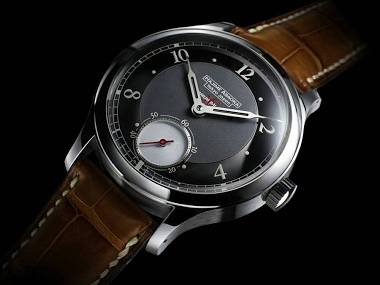
HA: All parts are made in Japan (except for a few
minor parts), designed and assembled in-house. All parts
except for the case is made here as well. Case is made by the
small factory in Tokyo suburb, who had never made anything watch related
products. I just brought to
them the precise specification and had them make
it. Of course, they do just machining and the
finishing is done here by
myself.


Case diameter 37mm, amplitude is about 270
degrees, power reserve for 40 hours. 18000 vph.


16mm Titanium Balance
wheel. The bigger balance wheel has the similar effect as the
higher beat. And the moment of inertia is the same as the
heavier material wheel. 16mm is almost
as twice big as the one of, for example, El Primero, and if the
diameter of the balance wheel is twice big, then the speed of the outer
rim is the same
as the half vibration movement
(36,000vph vs 18,000vph).


Prototypes and the final result
(from the right to the far left). Can take only one from the
32mm raw plate.

Front
sapphire glass is both side anti-reflective coated. Back side
glass is not coated.
The 2nd gear is offset (off
center) and it was one of big hurdles to overcome . I managed to
tighten the "play" of the additional gear to almost zero so that the
"time lag" of the start of the minute hand after setting the time is
about 10 seconds, while there are many watches which requires more than
30 seconds for the minute hand start moving. 


Even with tightening the
"play", special oil is used and parts worn-out is not of
concern. Servicing period is expected to be 5 years, like many
others.
The movement is not the
thinnest in the world, and it was another issue I had to
tackle. I did a few trick to make is look thinner.
One of them is to make the dial domey (is this English?) or
convex. See the second hand subdial. The gap on the
12h side is higher than the 6h side. BUT, the second hand
subdial itself is tilted a bit to make the dial less convex to the
extent the second hand never touches the
dial.

Also, the center of the dial is made of
ESD (Extra Super Duralumin)
because it is part of the movement, to make it
thinner. See that the center dial has two screw
holes. So, the center is ESD, small second subdial is German
Silver, and the outer of the dial is another material - could be fragile
or soft material because it is pressed down firmly by the center dial
which is screwed to the movement.


Second hand is made of ESD, red ink only
on the top of it, not the side of it. See also the video how
it is painted by hand.
Other hands
are German Silver.
Accuracy is within or better than COSC
standard (BUT, adjusted to SIX positions).

===============================================================
PPro:
Now, may I start the interview? Please tell the readers of
your background, history, how and why you decided to become a watchmaker
and such?
HA:
Sure. I actually graduated Tokyo University of the Arts,
majored in Industrial Design (but studied Graphic Design as well) (Note:
Tokyo University of the Arts is THE most difficult university to enter
for those who want to be an artist!). After graduation, I was
working freelance in the area of graphic design, mostly for
advertisement. These on the wall are all my works.
But that was not my real desire for life, but just doing it to make a
living. My true desire was industrial design - but it is not
easy to make a living doing industrial design only as freelance because
it is always "project based" and income is not stable. I kept
doing graphic design as the needs for advertisement is relatively
constant and gave me the stable income. Also, I kept doing it
to save up the capital to start the industrial design business, although
I was not too certain which area or which products I wanted to
do.


All his works.... actual photo + CG
PPro: When did you decide that
you wanted to make watches?
HA: About 15 years ago, I was asked to design a
watch. At that time, I found that it was not easy to design it
without knowing the inside. So, I started to want to make
watches myself. And then I started buying equipment about 10
years ago and started making watches 5 or 6 years ago. I
studied how to make watches by myself by reading books. I read
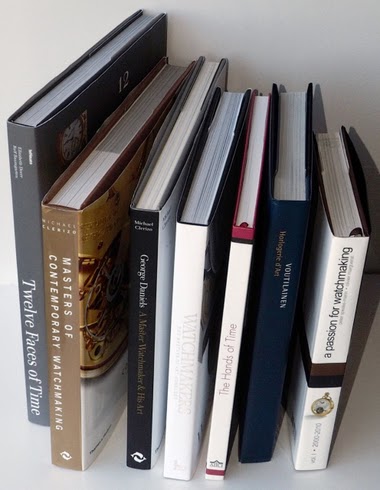
Daniel's "Watchmaking", too. That is a great book and I
respect Mr. Daniel very much. But I think that what is written
in there are all based on how watches were made 200 years ago, and I
thought there could be more efficient ways today. So, I now
design watches by CAD, and make parts by computerized machines and
finish by hand. I experimented a lot to find out how to make
it more efficient and as precise as possible. I made machines
to make parts as well as to print the dial by myself. I can
make all the parts here. Now I outsource the case machining (finish is done here by myself anyway), but I
can make the case by myself here, too.

PPro: As for the case,
you now said that it is outsourced now but are they watch parts
supplier? I thought there were very few
watch parts supplier in Japan
HA: No. They had never ever made any watch
related parts. Just a small metal processing supplier and I
just gave them the design with complete specification and they make it
according to that. To be honest, I want these high quality
"parts suppliers" to wake up and make something by themselves - they have
equipment, technology, attention to details. They can do
it. They are typically the suppliers for the big manufacturers
and the demand is not strong now. I hope they do create
something with their existing resource by seeing me doing it only by
myself. I want Japanese craftmanship to rise again because,
yes, they can.


The spring bar hole placement is well thought so
that the strap doesn't touch the case and fit the curve of the
wrist.
PPro: That is
great. Let me ask about the progress of your
watchmaking. Your officially first model was the Tourbillon
model sold at Wako. What inspired that design? The
appearance is similar to your first tourbillon watch, which you said you
made as an experiment (who would be able to make a tourbillon watch as
an experiment after only reading
books?).
HA:
Hmnn.... Yes, it looks like my first experimental tourbillon
watch, but much higher quality and the level of perfection.
The design is art deco. I wanted to make it dressy as well as
weighty watch because it is not cheap and did not want those who bought
it get tired of it.
His first
"experimental" tourbillon..... Although it says 001/003, this
is the ONLY one. Not for sale.


PPro: You said the tourbillon
watch is not cheap, but normally, tourbillon watch is more expensive
than yours. You put that tourbillon watch in the SS case, but
there are those who prefer precious metal cases only. What do
you think about it?
HA: I agree that platinum case is better as a
high-end watch. But, stainless is tougher. I am sure
I will make platinum case watch someday because the demand is
there. Having said that, I think making watches in the
precious metal cases doesn't mean much to me. There is no
practical reason to do that. Pink gold may be interesting from
design stand point. Also, titanium case has practical meaning
to make. But platinum doesn't mean much - appearance is
similar to stainless case. But then again, if I have tons of
money, I want to make platinum watches and sell them and I will probably
make precious metal cases on demand. Let me say this - as a
material, I like stainless steel. It is a very good
metal.
Tourbillon watch being
assembled.

Hirota: You were making
dials for certain brand. I understand that the quality of the
dial you made for them was superb. At that time I didn't know
what your real profession was.... How did you study or find
out how to make dials? It is not so often disclosed in
watchmaking books. Many independent watchmakers outsource
dials, but you make by yourself.
HA: I just experimented numerous
times. Information on printing dials is most scarce out
there. But the result or what I found to be best is probably
the same or similar to what they do in Switzerland. Of course,
the ink mix must be different, though. I made the very
precise dial printing machine - precision is the heart of multi-color
printing.

Five times ink
put!
Self-made printing
machine.

And how he uses this dial printing
machine....
PPro:
How many can you make per month, either tourbillon or the latest
one?
HA: One
per month, either way.
Mr.
Asaoka
PPro: What do you think is
the difference or should be the difference between your watchmaking and
Swiss watchmaking?
HA: Slightly different. Watchmaking has 300
years of history and perhaps the modern watchmaking has not been
fundamentally changed since 200 years ago. In general
watchmaking today is done by the modern technology, but the design,
inside and outside, is almost same as 200 years ago. I believe
that with today's technology, even the inside design (architecture or
structure) can be slightly different or more efficient. And
what I aim to achieve is making such watches. In other words,
for example, there are parts that today can be made as one but still
made separately - tourbillon carriage pillars, pins of the bridges,
guard pin of the anchor, etc. The less parts, the
better.
Self-made computerized
milling machine - took him three years to make


How he actually
makes the base plate (a bit longish, but very
interesting)
Same machine as Mr.
Daniel's.
Hirota: Your parts are
very precise. Some watchmakers do not pay such attention to
parts but adjust at assembling and
later.
HA: I
don't know how other independent watchmakers do, but I have seen the
parts supplier in Swiss and they are doing pretty well. But I
pay extra attention when processing the parts which requires both front
and back side processing. When you flip it, it can slip or
shift very slightly and that makes the parts not good enough. I
use the jig for such processing only once. I throw away such
jig each time in order to avoid such irregularity. I make the
jig each time with the parts which finished the front side processing on
it so that there is no room for
error.

PPro: What is
your favorite complication or you want to try
next?
HA: There
are complications I am interested, such as minute repeater, but I
believe that it is more difficult to simplify than to
complicate. So, I am rather interested in simplifying the
watchmaking. I like to challenge solving the problems with
simple solution.
PPro: What
is your thoughts on finishing?
HA: I finish with hand but don't finish where it is
uncalled for. Giving nice f inishing on where you can't see could actually cause the slight unintended "gap" from what had been carefully calculated. 
PPro: Do you
have any principle which you would never do or definitely
do?
HA: I would
not do something against the basic of horology. And I would
not do unnecessary things that has nothing to do with the function of
the watches.
PPro: In these two models you
have made so far, is there something like Asaoka
"DNA"?
HA: It
may not be so obvious, but my watches will always strictly stay in the
path to be the time measuring instrument. I am not interested
in other gimmicks.
PPro:
Thank you very much for your time today. I am looking forward
to your various projects going forward. Please keep up
posted.
HA:
Thank you for coming and let us stay in
touch.
=================================================================
As
I said in the beginning, he is a very unique independent
watchmaker. Never went to watchmaking school.
Accomplished to this level by studying alone and making the tools or
equipment by himself as well. Down-to-earth thoughts in terms
of business as well as high hope for Japanese craftmanship.
Hirota-san and I left his place very impressed. Hope you
enjoyed the interview as much as I did.
Thank you,
Asaoka-san and Hirota-san.
Ken
This message has been edited by KIH on 2012-12-01 07:00:11



Interview with Hajime Asaoka - Independent Watchmaker of Japan - and his new offering!

Impressive...
No, you haven't missed anything, I think...

Konbanwa Ken, well here it is evening...
I half agree with "finishing where people cannot see"... but..

I heartily agree - with you, Ken!


me want, me want, me want!
+1, good summary of my thoughts :-)
Very original.


Thanks a lot Ken for this very comprehensive post.

That's what is called a self-made watchmaker.
Thank you very much for the compliment...

Gyro Gearloose's laboratory...
Thanks, Mugnus..

Thanks Ken........
+1 ...
great aesthetics

Absolutely fascinating!
You read my ariticle right, Doas!
That's some amazing work!
Hi Howard,
What a fun read..... wonderful to see....
Ken, thank you for the excellent inverview.

Another great post Ken!
You will have a chance to see at Wako....
Inner dial is...
Great post, thanks Ken

I am extremely impressed, this is in the top 3 posts ever.


I have been following him on FB
